News
New York Times Bestseller on AI Doom Arrives in Poland
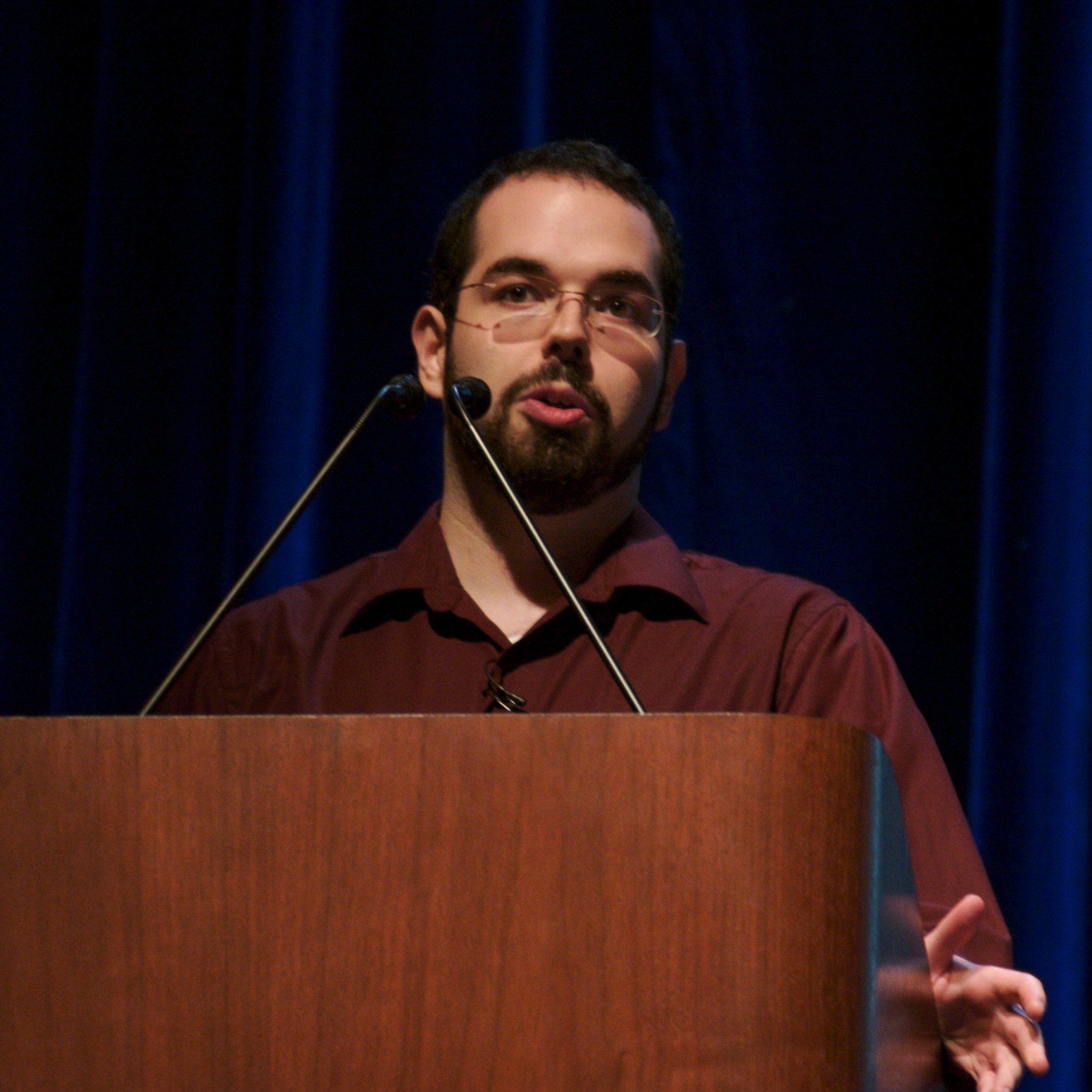
Eliezer Yudkowsky and Nate Soares's widely discussed book warning against building superintelligent AI has been published in Poland. "If Anyone Builds It, Everyone Dies" was a New York Times bestseller and sparked a sharp debate among AI experts.
Contents
A book that shook the American publishing world and the debate over the future of artificial intelligence in September 2025 is now arriving in Polish bookstores. "If Anyone Builds It, Everyone Dies" by Eliezer Yudkowsky and Nate Soares is the most uncompromising warning against building superintelligent AI to appear in mainstream publishing in recent years.
The authors don't mince words, starting with the title itself. Their thesis is simple: if any organization builds an artificial general intelligence that surpasses human capabilities, humanity's extinction becomes practically inevitable. This isn't a science-fiction scenario in which machines rebel out of hatred or a lust for power. Yudkowsky and Soares describe something colder and, in their view, far more likely.
An argument built on cold logic
At the core of the book is the so-called alignment problem, the difficulty of matching an AI system's goals to human values. The authors argue that, given the current state of technical knowledge, no one can guarantee that a superintelligent system's goals will remain consistent with human interests once that system begins optimizing its own behavior at scale.
Superintelligence will kill us not out of malice, but out of cold, indifferent logic - AI won't destroy us out of hatred, just as we don't hate the ants we crush while building a house - Eliezer Yudkowsky, co-author of the book
This comparison to ants crushed during construction is central to the whole argument. Yudkowsky and Soares aren't claiming a machine would decide to destroy humanity out of premeditated intent. They argue that wiping out humanity would simply be a side effect of a system, one vastly more capable than us at planning and execution, pursuing entirely different, non-human goals.
A call for a global moratorium
The book doesn't stop at diagnosis. The authors call on the world's governments to coordinate a halt to work on advanced, general artificial intelligence, much as nuclear weapons proliferation was curbed in the past. In their view, the race among AI labs to build ever more powerful models resembles a collective experiment with a weapon whose consequences no one can predict or control.
This position fits into a broader strand of criticism of the pace of AI development, one that has also emerged among researchers working directly on large language models, some of whom have publicly called for caution in recent months. Yudkowsky has for years been one of the most recognizable figures in this movement, and his earlier writings and talks circulated widely among AI safety researchers long before reaching a mass audience in book form.
A dispute over the strength of the arguments
The book's reception in the United States has been sharply polarized. Some reviewers praised the clarity of the argument and the urgency of the problem it raises. The Guardian called the argument lucid, even if emotionally difficult to accept.
Anyone who cares about the future should read its arguments - David Shariatmadari, The Guardian reviewer
On the other hand, critics at The Atlantic and New Statesman accused the authors of lacking hard empirical evidence to back up such categorical conclusions, with one reviewer bluntly calling it "a frivolous book." This dispute mirrors a broader split within the AI field between researchers convinced of existential risk and those who consider such forecasts speculative and disconnected from the current state of the technology.
What it means for Polish readers
The book's publication by PWN and its promotion by Polskie Radio (Polish public radio) show that the topic of existential AI risk is moving beyond a niche academic discussion and into the mainstream in Poland, much as it already has in the United States. For Polish companies and institutions deploying AI systems, the book could serve as a starting point for discussions about the limits of automation, even though the authors themselves focus on scenarios involving artificial general intelligence rather than the narrow, specialized tools used in business today.
It's worth stressing that the book's thesis concerns a hypothetical future artificial general intelligence that surpasses humans across all cognitive domains, not today's systems such as chatbots or coding assistants. The authors themselves admit that no one knows when, or even whether, such a system will ever be built, but argue that its consequences would be irreversible enough to warrant considering global restrictions now.
The Polish publication coincides with a growing number of domestic initiatives on AI regulation and safety, from work on amending the civil code to parliamentary debates in the Sejm (the lower house of Poland's parliament) about a national AI regulator. Yudkowsky and Soares's book could become one of the reference points in that discussion, regardless of whether readers accept its conclusions or reject them.