News
Chinese Companies Sell Companion Robots as a Cure for Loneliness
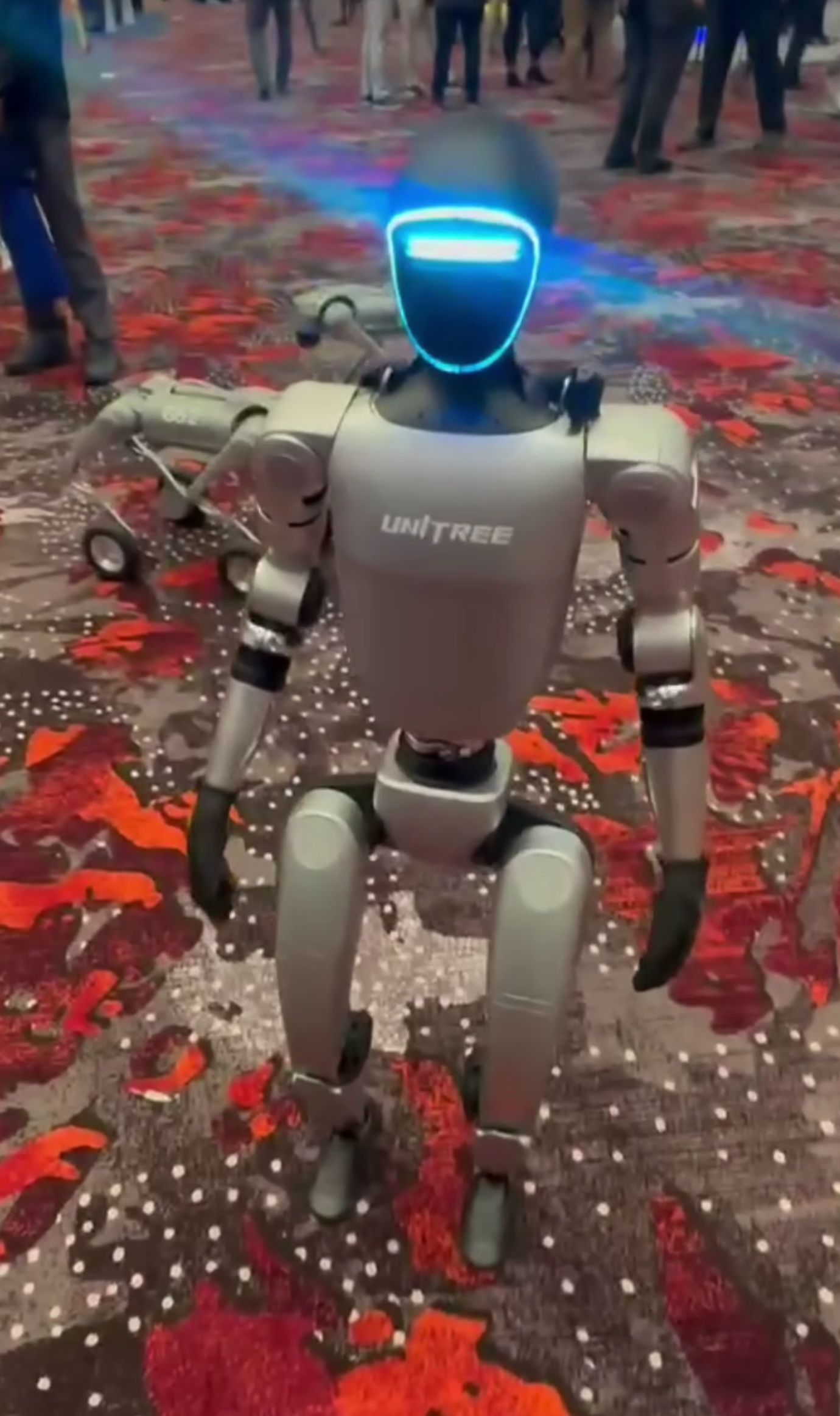
At the World Robot Conference in Beijing, Chinese startups unveiled a new generation of machines designed not for labor but for closeness, featuring soft skin, micro-expressions and emotion recognition. UBTech has already gathered more than 13,000 preorders for its U1 humanoid.
Contents
Chinese robot makers are shifting away from machines built for dancing and running, toward machines built for companionship. At the World Robot Conference in Beijing, more than a dozen companies showed off humanoids and smaller devices designed solely to talk, hug and offer emotional support to lonely people - a market they are targeting that counts hundreds of millions of potential customers.
Until recently, Chinese robotics showcases focused on athletic feats - robots running marathons or fighting in boxing rings. This year's conference in Beijing pointed to a different direction. Instead of strength and speed, what matters now is soft skin that mimics human texture, the ability to reproduce facial micro-expressions, and the capacity to read a conversation partner's mood.
Soft Skin and Micro-Expressions
The most talked-about product is UBTech's U1, known in China under the name Youbixuan. The company calls it the first ultra-realistic humanoid designed for mass production. Prices start at 120,000 yuan and reach 990,000 yuan for the most advanced version, yet more than 13,000 preorders have already been placed, with deliveries planned for September.
Competitors have no intention of ceding ground. Somnia is designing a 175-centimeter robot meant for close, intimate interaction. Xara has equipped its humanoid with 32 movable points on its face that simulate micro-expressions in real time. ZuzuZoos went the opposite direction on the scale - a palm-sized, temperature-adjustable pendant meant to be hugged every day.
The Economics of Loneliness
Behind this wave of products lies demographics. China has more than 320 million residents aged 60 and older, equivalent to 23 percent of the population, a figure expected to exceed 400 million within a decade. On top of that, more than 90 million adults live alone, and 118 million seniors have children who have moved out of the family home. It is this phenomenon that the industry and media have dubbed the "loneliness economy."
UBTech estimates the ultra-bionic companion robot market will grow from today's tens of billions of yuan to trillions of yuan over the 2026-2036 decade. The forecast fits with state policy - in January 2024, China's State Council published a plan to support the so-called silver economy, treating an aging population not just as a fiscal burden but as an industrial opportunity.
Unconditional Loyalty
Our bionic robots can accompany you for your entire life. They will never betray you, will always be faithful to you, and will love you unconditionally - Michael Tam, head of UBTech's UWorld brand
That marketing message, however, raises concerns among psychologists. MIT technology researcher Sherry Turkle has warned for years that machines that "never let you down" can weaken people's ability to build relationships with other people, because contact with a robot removes the need to deal with disappointment, compromise and conflict, which are an inseparable part of genuine closeness.
Regulations and Limits
Chinese authorities spotted the risk earlier than most countries. Current regulations ban AI systems from manipulating users' emotions, encouraging self-harm, or offering virtual "partners" to minors. It is a response to reports of users, including in other countries, who developed strong emotional attachments to chatbots and AI assistants, sometimes to the detriment of their own mental health.
Manufacturers also say they are investing in data security, since companion robots by definition record exceptionally intimate information about their owners, from mood to everyday conversations. The industry points to the risk of such data leaking and the lack of unified ethical standards as the main obstacles to scaling sales beyond the wealthiest customers.
For now, prices keep consumer companion robots in the premium segment, but manufacturers are also aiming lower - competing models are expected to cost in the low tens of thousands of yuan, roughly the price of a mid-range electric scooter. If those plans materialize, the machines could end up not only with affluent singles in big cities but also in care homes and the homes of elderly people in smaller towns.
China is not the only country grappling with an aging population and a growing share of people living alone - similar demographic trends are visible in Japan, South Korea and Europe. That is why the experiments of Chinese companion robot makers are being watched as a test of whether technology can genuinely ease the effects of these shifts before similar products reach other markets.