News
China's Open Models Are Squeezing the Middle of the US AI Market
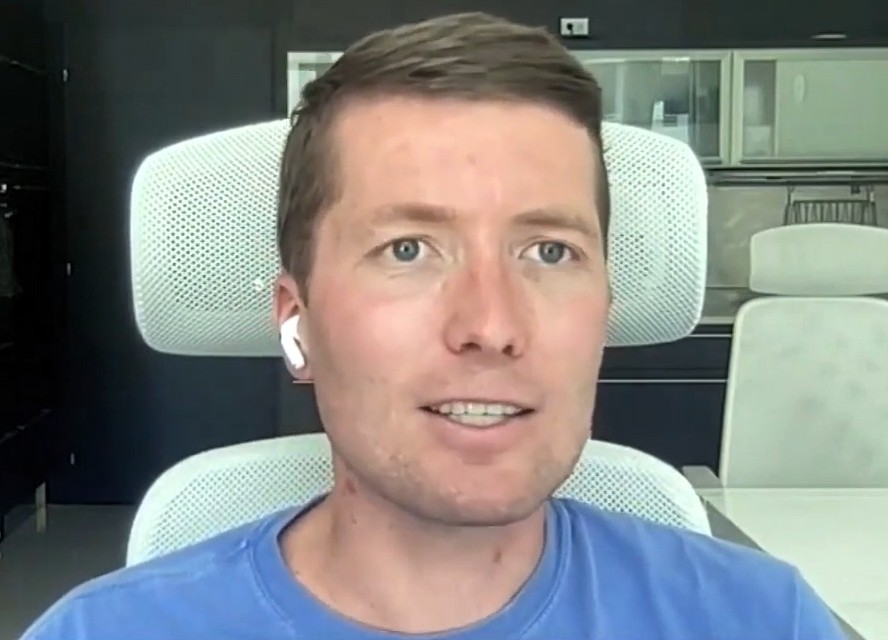
Hugging Face's CEO says China now dominates open models and could soon overtake the US at the frontier too. Free models like Kimi K3 and DeepSeek V4 Flash are creating a so-called death zone for mid-tier American AI companies.
Contents
Chinese AI labs have seized the initiative in the race for open models, and the American industry is starting to openly discuss a gap it previously preferred not to notice. Hugging Face CEO Clément Delangue said China already dominates the open source model segment today and could catch up with the leading closed systems as early as this year.
A Death Zone for the Middle Tier
Bloomberg dubbed the phenomenon the "death zone," the space where mid-tier American AI companies now find themselves. They cannot compete on price with free Chinese models, yet they also lack enough of a quality edge to charge a premium for access to closed models. The cost gap can be dramatic: running a complex task on DeepSeek V4 Flash costs $0.03, while the same type of task on Anthropic's Claude Fable 5 costs $3.15, more than a hundred times as much.
China clearly dominates the open model space right now, and I wouldn't be surprised if it starts dominating at the frontier as well, either this year or next - Clément Delangue, CEO of Hugging Face
What America Lacks
According to CNBC, the problem is that the United States has a well-developed strategy on AI chips, rolling out ever more export restrictions on Nvidia's latest chips, but still has no strategy at all for open models. Chinese companies, despite lacking access to the most powerful American processors, have focused on architectural efficiency and as a result achieve results close to closed models at much lower computational cost.
Some American commentators also point to distillation, the method of training your own models on responses generated by competitors' systems. The White House had previously accused the Chinese company Moonshot AI of using Anthropic's models this way. Signatories of the August open letter, including Nvidia and Meta, respond that distillation is a standard and widely used technique for improving models, and that restrictions should target the unlawful extraction of value from closed models, not the method itself or the open release of weights.
A Split in Silicon Valley
The August open letter revealed a clear split in the American AI industry. Companies building open source infrastructure and tools, such as Hugging Face, Meta, Microsoft, Mistral, Nvidia and Replit, are urging Washington not to impose broad bans on open models, since that would also hit American developers of such systems. Replit CEO Amjad Masad put it bluntly, saying that banning Chinese open models would in practice mean banning open models altogether.
On the other side stand companies betting on closed models and selling access through their own clouds, namely OpenAI, Anthropic, Google DeepMind and SpaceX. It is their business models that suffer most from the price pressure of free Chinese alternatives, and these companies are simultaneously preparing for their first public offerings, which raises the stakes of the dispute even further.
What It Means for Poland and Europe
For Polish companies and developers, cheaper open models represent a real alternative to expensive subscriptions from American providers, especially for applications that do not require absolute top-tier quality. At the same time, the growing popularity of Chinese open models complicates European technology policy, since it raises the question of whose infrastructure, and under whose control, will run the systems used by local companies and public institutions.
The American administration is still weighing whether and how to restrict access to Chinese open models, and a decision on the matter could come in the coming months. Its shape will determine whether the global market for AI tools remains dominated by closed American platforms or shifts toward cheaper, open alternatives developed in China.