News
AI System Now Watches Over Public Pool in Wolsztyn
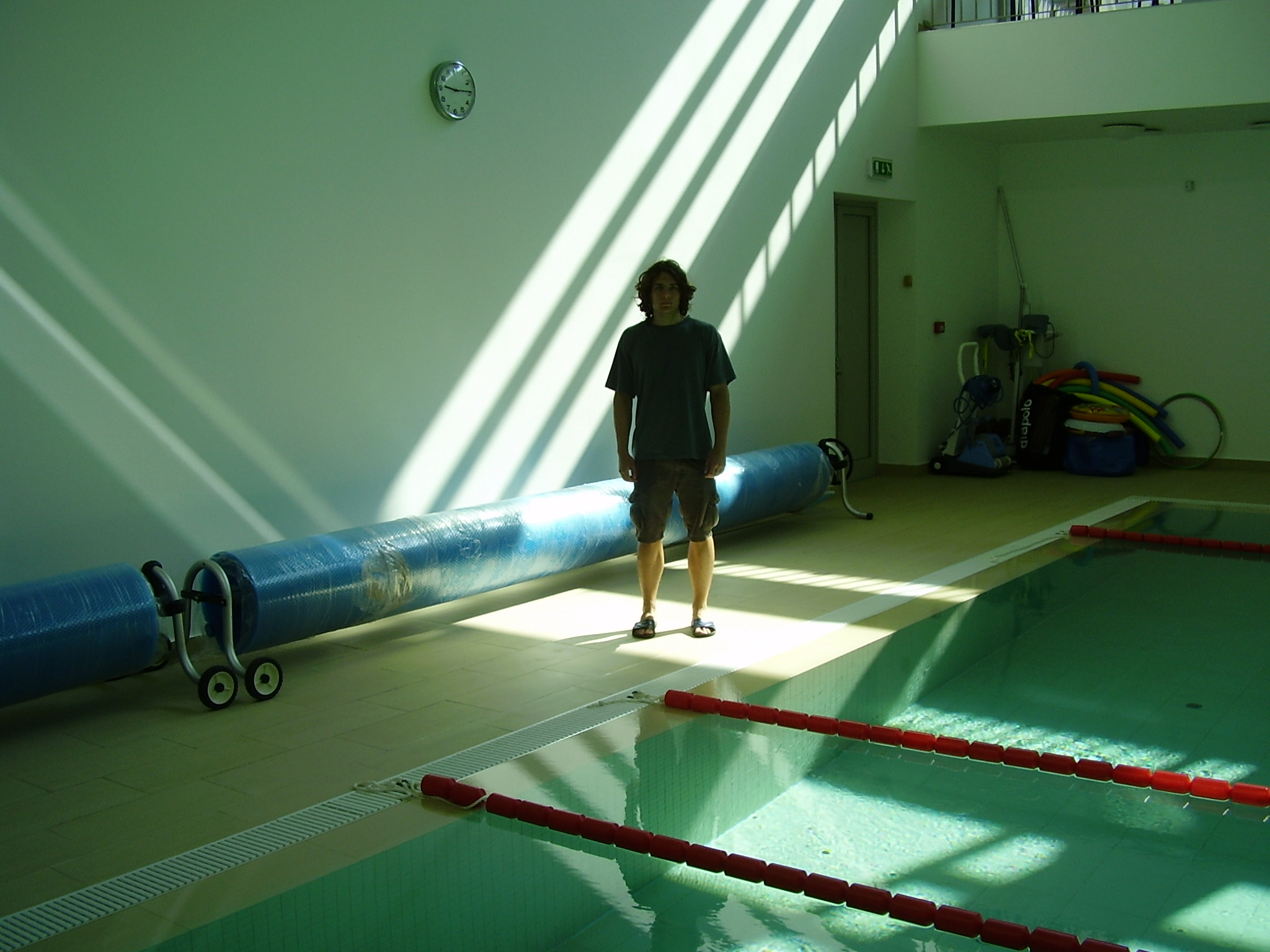
The municipal pool in Wolsztyn has activated the SwimEye system after a technical maintenance break, using seven cameras and artificial intelligence to detect drowning swimmers underwater in real time.
The municipal swimming pool in Wolsztyn became the fifth facility in Poland to install the SwimEye system, designed to help lifeguards detect underwater hazards. The investment cost around half a million zlotys and went live after this year's technical maintenance break at the pool.
The system works by continuously analyzing footage from seven cameras positioned above and below the water's surface. Artificial intelligence algorithms track the movement of swimmers and, the moment they detect someone motionless or behaving in a way that suggests danger, immediately send an alert to lifeguards along with the exact location of the incident.
The Problem of Silent Drownings
The hardest cases to notice with the naked eye are precisely these silent drownings, situations in which a person disappears underwater without any shouting or visible struggling from the shore. This is exactly the scenario the SwimEye system is meant to catch most effectively, alerting the lifeguard the moment someone stops moving in the water.
The solution does not replace a lifeguard, but is meant to serve as an additional set of eyes that never loses concentration and watches the entire pool at once, including spots that are harder to see from the lifeguard's station.
These are like additional eyes that signal when someone remains motionless in the water. The cost of this system is around half a million zlotys. In my view, it's worth every penny if it can save human lives. - Dominik Tomiak, mayor of Wolsztyn
Modernizing the Whole Facility
The SwimEye installation was part of a broader technical maintenance break at the Wolsztyn pool, during which the facility also underwent other renovation work. Tiles in the lobby, restrooms and changing rooms were replaced, the sauna was modernized, clothes dryers were added, and the payment system was supplemented with a self-service kiosk.
All of this year's investments at the pool, including the SwimEye system, added up to around 850,000 zlotys. City authorities present them as a package of changes meant to improve both the comfort of using the facility and the safety of swimmers.
Scale of the Trend in Poland
Wolsztyn joins four other Polish pools that previously decided to implement the SwimEye system. Image-analysis technology supporting lifeguards is also increasingly appearing in other European countries, where similar solutions are being tested at municipal pools as a supplement to, not a replacement for, traditional lifeguard supervision.
For smaller local governments, such as the nearly twelve-thousand-resident Wolsztyn, an expenditure of around half a million zlotys on a single safety system is a significant line item in a sports facility's budget. The decision shows, however, that the cost of this type of technology has fallen enough to make it accessible not only to large aquaparks in major cities, but also to pools in smaller towns.
Camera- and machine-learning-based drowning detection systems have been in development for several years, and their effectiveness depends mainly on the number and placement of cameras and on the quality of the algorithms that distinguish normal swimming from an emergency situation. In Wolsztyn's case, seven cameras are meant to cover the entire pool basin, which should reduce the risk of blind spots.
For residents of the region, the practical change will only become visible once the pool reopens after the technical break, when additional AI-supported monitoring will operate alongside lifeguards, running in parallel with their everyday observation of the pool surface.