News
AI-Assisted CT Analysis Confirms Hypertonic Saline Slows Mucus Plugging in Cystic Fibrosis Children
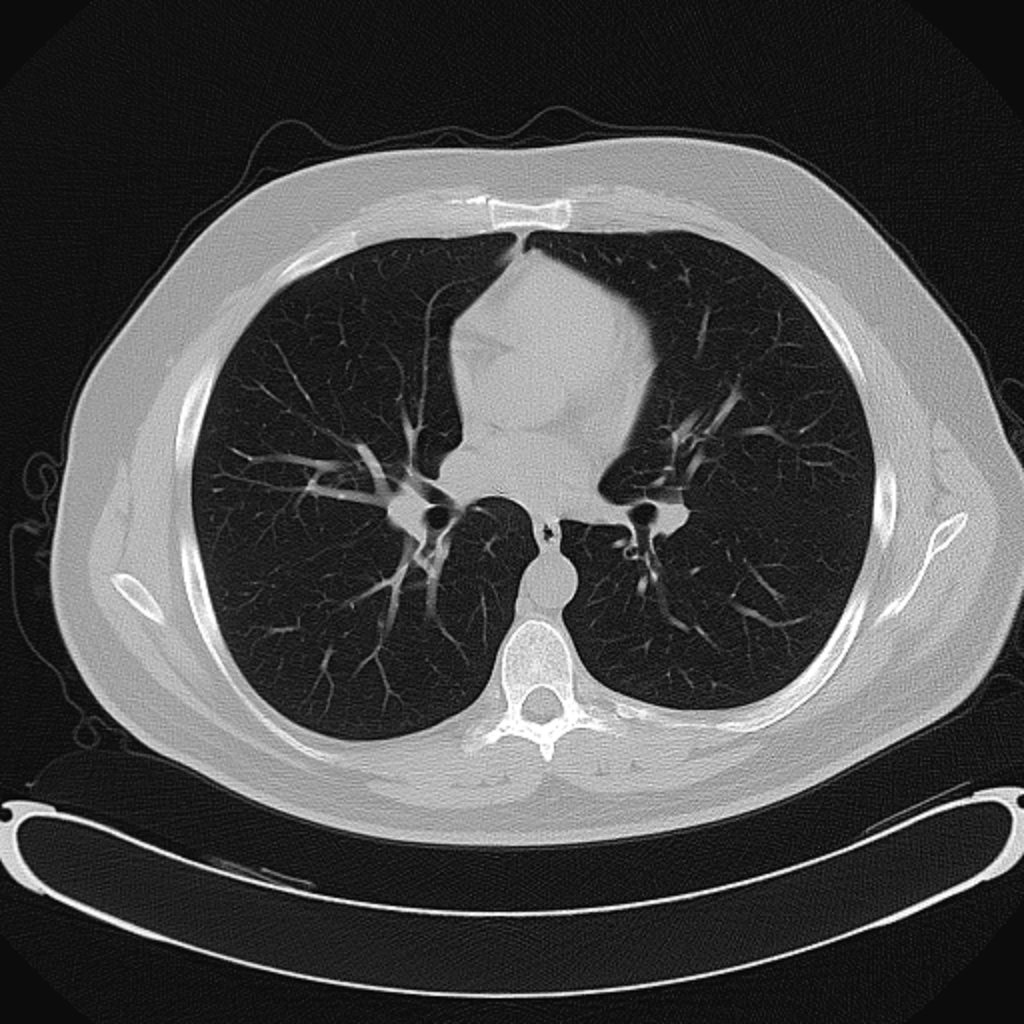
AI-assisted CT scan analysis found that inhaled hypertonic saline solution reduces the buildup of mucus plugs in the lungs of children with cystic fibrosis aged 3-6. The results were published on August 27, 2026 in the European Respiratory Journal.
Contents
Inhaled hypertonic saline solution is more effective than isotonic saline at slowing the buildup of mucus plugs in the airways of young children with cystic fibrosis, according to a CT scan analysis conducted using an artificial intelligence algorithm. The results were published on August 27, 2026 in the European Respiratory Journal.
What the Study Found
A team of researchers analyzed data from the randomized SHIP-CT trial, conducted between 2016 and 2019 at four centers: Beijing Chao-Yang Hospital, Sophia Children's Hospital in Rotterdam, Seattle Children's Research Institute, and the Hospital for Sick Children in Toronto. The post hoc analysis included 115 children with cystic fibrosis aged 3 to 6, split into a group receiving inhaled hypertonic saline solution (55 participants) and a control group given isotonic saline (60 participants).
Chest CT scans were taken at baseline and again at the 48-week follow-up. Instead of the traditional, time-consuming visual assessment by radiologists, the researchers used automated software to segment the bronchial tree and detect mucus plugs.
How the LungQ Algorithm Works
The image analysis used LungQ software from the Dutch company Thirona, trained on expert annotations by radiologists. The system automatically segments the bronchial tree, identifies fully occluded bronchial segments, and determines the location, number, and volume of mucus plugs. The algorithm can detect changes down to the seventh generation of bronchial branching, a level of detail that would take far longer to assess manually and would introduce greater variability between raters.
Automated CT analysis allowed the researchers to process more than 200 imaging studies in a way that was reproducible and comparable across centers, something that would have been far harder to standardize in a multicenter trial using manual assessment.
The Numbers Behind the Findings
At the start of the study, mucus plugs were detected in 41 percent of CT scans in the isotonic group (24 of 59 scans) and 33 percent in the hypertonic group (17 of 52 scans). After 48 weeks of treatment, the proportions diverged sharply: in the isotonic group, the share of scans showing plugs dropped only slightly, to 37 percent, while in the hypertonic group it fell to just 12 percent.
Among children who had mucus plugs detected at baseline, the number of plugs increased over the follow-up period in 15 children in the isotonic group, but in only 3 children in the hypertonic saline group. The median plug volume in the isotonic group rose from 0.04 to 0.07 milliliters, while in the hypertonic group it fell from 0.08 to 0.05 milliliters.
Implications for Treatment
The authors of the paper, who include researchers from centers in Beijing, Rotterdam, Seattle, and Toronto, note that hypertonic saline likely works by more effectively clearing retained secretions from the airways, which limits the formation of new mucus obstructions in smaller bronchi. The findings add to earlier data from the SHIP-CT trial and demonstrate the practical value of automated CT analysis in evaluating the effectiveness of mucolytic therapies in the youngest patients.
The importance of hypertonic saline solution in young children currently treated with CFTR modulator therapy remains unresolved - from the conclusions of the paper in the European Respiratory Journal
This caveat matters because most children with cystic fibrosis in developed countries are now treated with modern CFTR modulators such as elexacaftor-tezacaftor-ivacaftor (ETI), which on their own significantly improve mucociliary clearance. The SHIP-CT trial, however, was conducted between 2016 and 2019, before modulator therapies became standard treatment for children this young, so the question of whether hypertonic saline still provides added benefit for patients on ETI remains open.
Why It Matters
Cystic fibrosis is a genetic disease in which thick, sticky mucus builds up in the airways, promoting chronic infections and progressive lung damage. Assessing treatment effectiveness in young children is difficult because standard lung function tests are hard to perform at that age, and traditional visual CT assessment is time-consuming and prone to disagreement between radiologists. AI-based automated image analysis gives researchers a more objective and reproducible tool for tracking disease progression and treatment effects in this hardest-to-study age group.
For Polish centers that treat cystic fibrosis in children, these findings offer a strong argument for keeping hypertonic saline inhalation in the treatment regimen even in the era of CFTR modulators, at least until dedicated trials combining both treatments are conducted. They also point to the growing role of AI tools in imaging diagnostics for rare diseases, where patient and scan volumes are too small to justify training dedicated radiology teams for the tedious manual analysis of thousands of CT slices.