News
AI Finds How to 3D-Print Tricky NASA Alloy After 40 Attempts
Washington State University researchers used AI to find 3D printing parameters for NASA's specialized GRCop-42 alloy, running just 40 experiments instead of searching through more than 100 million possible combinations.
Contents
A team of researchers at Washington State University used artificial intelligence to crack a problem that would have required testing more than 100 million parameter combinations by hand. The goal was to find 3D printer settings capable of producing GRCop-42, a copper-chromium-niobium alloy developed by NASA for rocket engines. The AI system needed just 40 experiments, spread across three months of work, to get there.
A needle-in-a-haystack problem
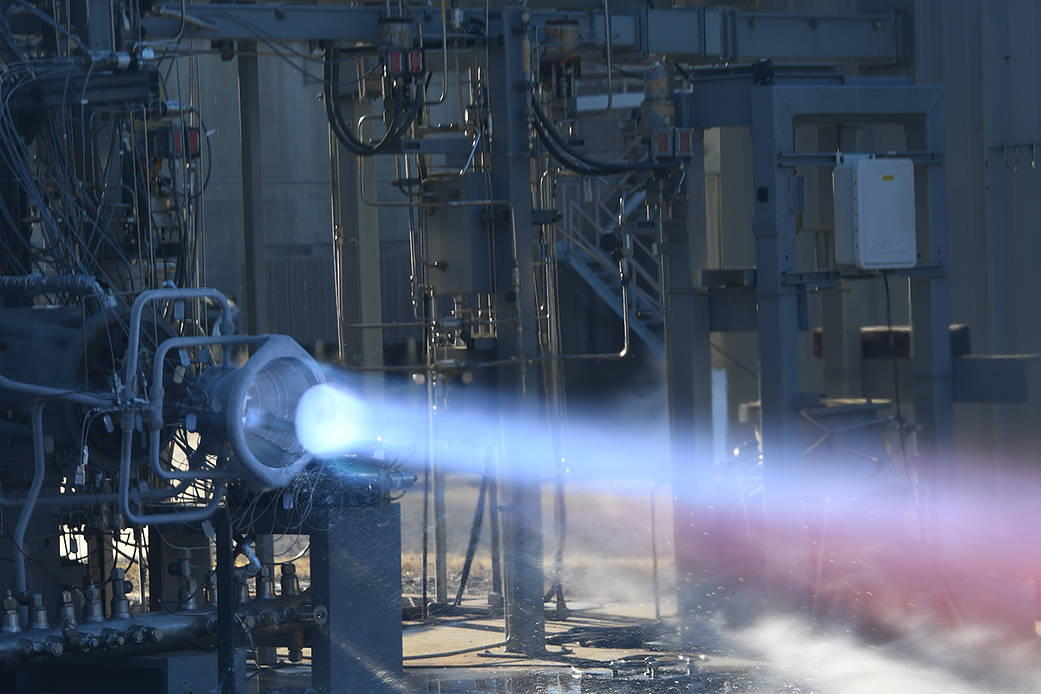
GRCop-42 is prized for its high thermal conductivity and strength at extreme temperatures, which is why it's used in rocket engine combustion chambers and nozzles. But printing it is expensive and energy-intensive. A single print run costs hundreds of dollars, and analyzing the quality of the printed part takes several more days. On top of that, it requires high laser power that most printers on the market simply can't deliver.
The research team was led by Jana Doppa, a computer science professor at Washington State University who holds the Huie-Rogers Endowed Chair Professorship. Doctoral student Azza Fadhel co-authored the first paper, with additional contributions from Nathaniel Zuckschwerdt, Susmita Bose and Amit Bandyopadhyay of the School of Mechanical and Materials Engineering, and Aryan Deshwal of the University of Minnesota.
This is a very hard case for AI. Every time you try something, you get a binary success or failure signal, and you're trying to minimize the number of trials so you can find those successful needles as fast as possible - Jana Doppa, computer science professor, Washington State University
How the algorithm worked
The system didn't guess at random. Based on prior results, it learned to estimate the probability of success for a given combination of parameters, then chose the next batch of experiments by balancing promising options against more uncertain ones worth testing. The model was also trained on 37 earlier failed configurations that the materials team had collected before AI was brought into the project.
Azza Fadhel described what day-to-day collaboration with the materials engineers looked like. Some attempts ended in complete failure, but every failure still generated data that improved the model.
Sometimes they'd print a given configuration and the product would just melt. It couldn't be printed, and even with more time and money, they wouldn't have been able to try all 100 million options - Azza Fadhel, computer science doctoral student, Washington State University
Democratizing access to a specialized material
The key discovery was a configuration that worked at a laser power of just 500 watts, far lower than what's typically required to print this alloy. That means GRCop-42 could be printed on much cheaper, more widely available equipment, rather than only on specialized, expensive high-power systems.
Doppa noted that until now, only a handful of facilities with the right equipment had access to this technology. Finding parameters that work on commercial printers opens the door for universities, smaller labs and companies that can't afford specialized high-power systems.
Ninety percent of commercial printers can't print this metal alloy, so since we were able to find these feasible process parameters, it allows us to use these commercial printers, and we're essentially democratizing the printing of this alloy - Jana Doppa, computer science professor, Washington State University
Applications beyond space
While GRCop-42 is mainly associated with the space industry and rocket engine combustion chambers, the Washington State University team points out that a similar approach, using AI to minimize the number of costly physical experiments, could prove useful in other fields where the number of possible configurations is enormous and each attempt consumes time, money or materials. The researchers cite drug discovery and materials research as examples.
Doppa admitted he was surprised by how effective the method turned out to be, given that every experiment carried real material and equipment costs, and a wrong decision meant wasted time and money for the engineering team.
The paper describing the method appeared in the Proceedings of the AAAI Conference on Artificial Intelligence, one of the most important AI conferences, where it won an award for innovative deployed application. That's a signal the AI research community sees this project not just as an engineering curiosity, but as an example of machine learning applied practically to real, costly manufacturing problems.