News
Sam Altman Confirms OpenAI Will Build a Humanoid Robot
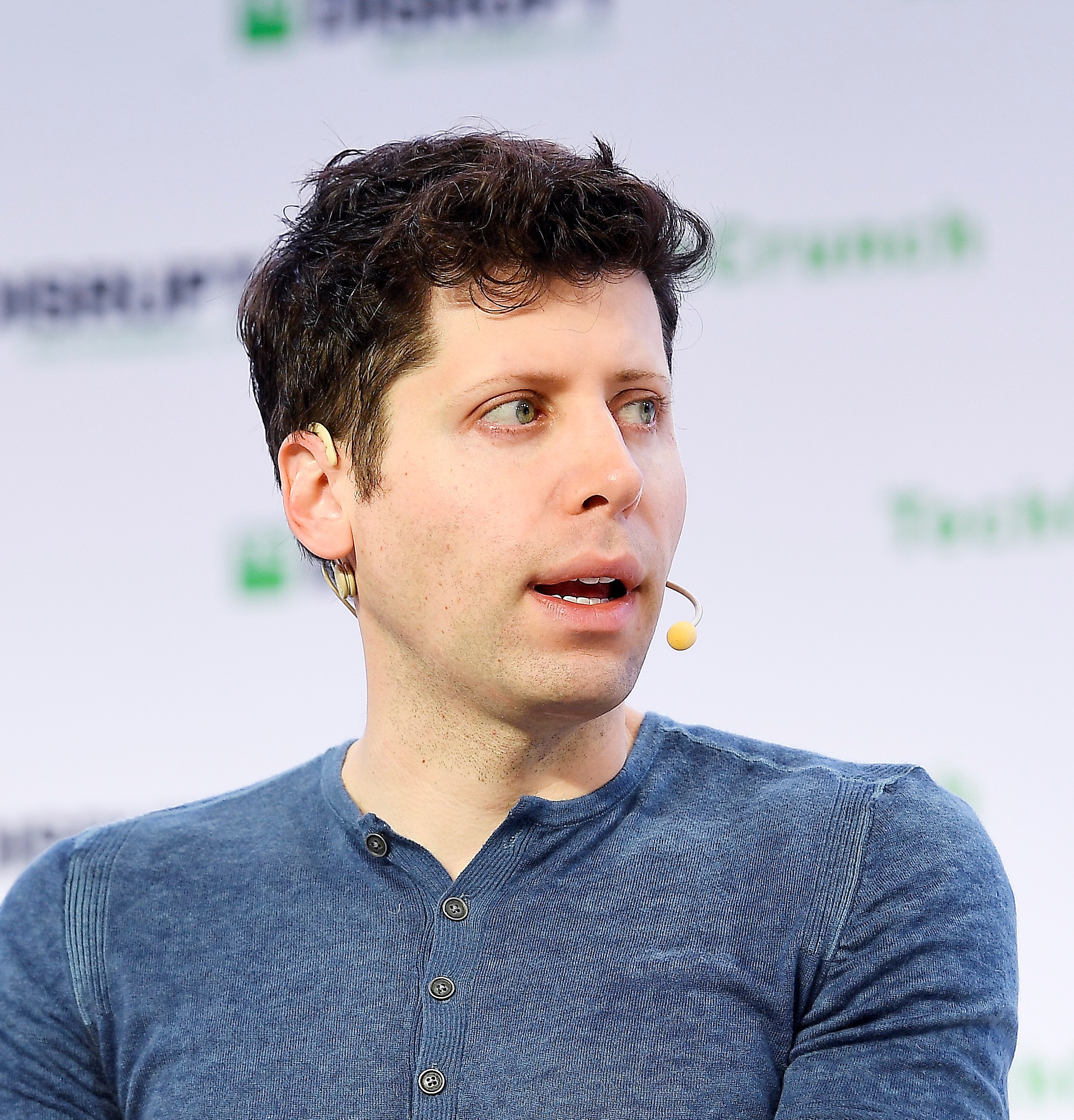
OpenAI's CEO said plainly on a podcast that the company will build a human-shaped robot, arguing the physical world is designed around the human body. It's the clearest confirmation yet since the company's internal robotics division launched in May 2026.
For months, Sam Altman avoided a clear declaration on whether OpenAI intended to build its own humanoid robot or merely the software running someone else's hardware. In an interview published on September 3, 2026 on the Sources podcast, he finally gave an unambiguous answer: the company will build a machine with a human shape, alongside robots of other forms designed for data centers.
The Podcast Declaration
Asked directly whether OpenAI's robotics ambitions meant a humanoid or rather a machine built for data center work, Altman answered with one word: "Both." He elaborated immediately after, leaving no room for doubt about the direction the company is heading after years of cautious signals and declined comments.
We will definitely do a humanoid. We'll also work on other forms - Sam Altman, CEO of OpenAI
The reasoning the OpenAI chief gave is practical, not ideological. The physical world, from door handles to keyboards, from industrial machinery to kitchen counters, was designed with the human body in mind. Altman argues that a robot capable of functioning smoothly in that environment needs similar proportions and range of motion, otherwise every task requires its own hardware design.
OpenAI's Robotics Division
OpenAI Robotics was formed in May 2026 out of an earlier research project on world simulation. It's led by Aditya Ramesh, previously known for his work on the DALL-E image generator and the team behind the Sora video model, a choice that itself signals OpenAI sees robotics as an extension of its generative modeling and simulation expertise rather than a separate hardware business.
Hiring is scaling up steadily. The division started with 11 open positions; today there are 19, all based in San Francisco. Four roles are dedicated to actuator design, the mechanisms that drive a robot's joint movement, and the company is also seeking specialists in circuit boards, thermal simulation and mass production, pointing to a shift from concept phase to hardware engineering.
The Humanoid Race
OpenAI is entering a market where competitors have struggled for years to move from demonstrations to real-world deployment. Tesla's Optimus entered production in August 2025 but had not reached customers by mid-2026, and Elon Musk himself admitted in January 2026 that no unit was yet doing useful work in Tesla's factories.
OpenAI previously had a close investment relationship with Figure AI, a startup building humanoid robots: in 2024, OpenAI invested $675 million in the company. In 2026, however, the two companies publicly parted ways, after which OpenAI decided to build robotics in-house. In the background, the global humanoid market is growing fast in raw numbers but remains dominated by China, which accounted for more than 97 percent of the roughly 19,100 units shipped in the first half of 2026.
I think all of that matters less than understanding how to build the brain that will make the robot work - Sam Altman, CEO of OpenAI
What Comes Next
Altman gave no launch date, no production target, and no name for a manufacturing partner. Unlike the consumer device being developed with Jony Ive, for which he pointed to an early 2027 timeframe, for the humanoid he used only the word "definitely," with no timeline attached. He also acknowledged that the near-term priority isn't home robots but machines that support workers building infrastructure, including the data centers OpenAI itself must keep erecting at an ever faster pace.
For the Polish market, where discussions about robotization mostly revolve around industry and logistics, OpenAI's entry into the humanoid segment mainly sets a new reference point in the debate over how quickly language and vision models will translate into physical machines. For now, Altman's declaration remains a strategic direction rather than a product, but the mere fact that OpenAI has openly dropped its previous restraint is changing the tone of the conversation across the industry.