News
Pope Leo XIV: Decisions Over Human Life Are Being Handed to Machines
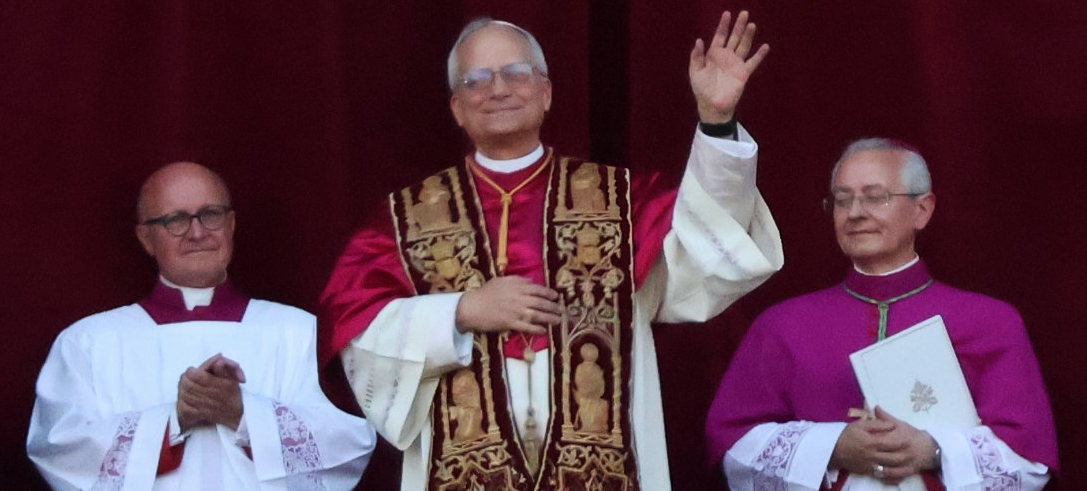
In an address to the International Institute of Administrative Sciences, Pope Leo XIV warned that decisions concerning human life are increasingly being entrusted to machines, and asked whether humanity will retain control over its own inventions.
Contents
Pope Leo XIV, in an address delivered on August 28, 2026, in the Vatican, warned that one of the most serious problems of our time is entrusting decisions about human life to machines. He made the remarks to members of the International Institute of Administrative Sciences, an organization bringing together researchers and public officials working on adapting public administration to technological change.
This is not the first time this year Leo XIV has spoken about artificial intelligence, but the August address carries more weight than his earlier remarks. Instead of general calls for digital ethics, the pope directly raised the question of the limits of human control over technology that humanity itself created.
A Question of Control
In his address, Leo XIV pointed to the pace at which AI-related innovations are developing and asked directly whether, in the future, humanity will be able to control these machines or will instead become a victim of its own inventions. The question arose in the context of public administration, institutions that on one hand benefit from automation and on the other are obligated to protect citizens from its abuses.
The pope stressed that calls for caution, rigorous controls, or even slowing the adoption of AI are not opposition to progress but an expression of responsible concern for the human family. This framing fits the tone Leo XIV has set for his entire pontificate on new technologies since his election in 2025.
One of the most serious problems today is the realization that decisions concerning human life are being entrusted to machines - Pope Leo XIV
Calling for caution, rigorous controls, and sometimes even a slowdown in the adoption of AI does not mean being against progress, but showing responsible concern for the human family - Pope Leo XIV
Concentration of Technological Power
A separate thread of the address concerned the concentration of digital tools in the hands of a small number of economic and technological actors over whom, as the pope noted, states have increasingly little control. Leo XIV called for the common good not to be sacrificed to private interests and urged the creation of ethical frameworks governing the use of AI in public administration.
This echoed a theme the pope had already developed in May, in the first encyclical in history devoted entirely to artificial intelligence, Magnifica humanitas. The document spoke, among other things, of the need to disarm AI, that is, to strip it of its role as a tool of domination and exclusion, and warned of the risk that technological change could slip beyond the control of reason and begin to constrain people without their knowledge or consent.
A Pattern of Statements
The August address is not an isolated incident. In May, at a conference held by the Dicastery for Communication devoted to protecting human voices and faces, Leo XIV said the challenge posed by AI is not technological but anthropological in nature, and warned against the blurring of what it means to be human when chatbots replace human relationships. Earlier in August, the pope also spoke of the risk that AI could become a new form of economic colonialism, deepening the gap between rich and poor countries.
The recurrence of these statements shows that the Vatican treats rules governing artificial intelligence as one of the priorities of the current pontificate, alongside traditional social themes such as poverty and migration. The Catholic Church, with its worldwide network of educational and charitable institutions, also has a practical stake in how AI affects human relationships and access to resources in developing countries.
Relevance to the Regulatory Debate
For Polish and European readers, the pope's remarks fit into a broader debate over AI oversight playing out simultaneously in Brussels, Washington, and other capitals. As the EU's AI Act enters further phases of enforcement and governments around the world argue over the pace and scope of regulation, the voice of a moral authority with global reach, the papacy, adds weight to arguments for a more cautious approach to deploying artificial intelligence systems in public administration and services critical to citizens.
Leo XIV did not put forward specific legislative proposals or specify which control mechanisms he considers sufficient. His role remains that of a moral commentator rather than a regulator, but in practice his statements are often cited by politicians and non-governmental organizations as an argument in debates over the pace of AI adoption in the public sector.