News
Warsaw's Nomagic Deploys AI Brain for Warehouse Robots at Live Customers
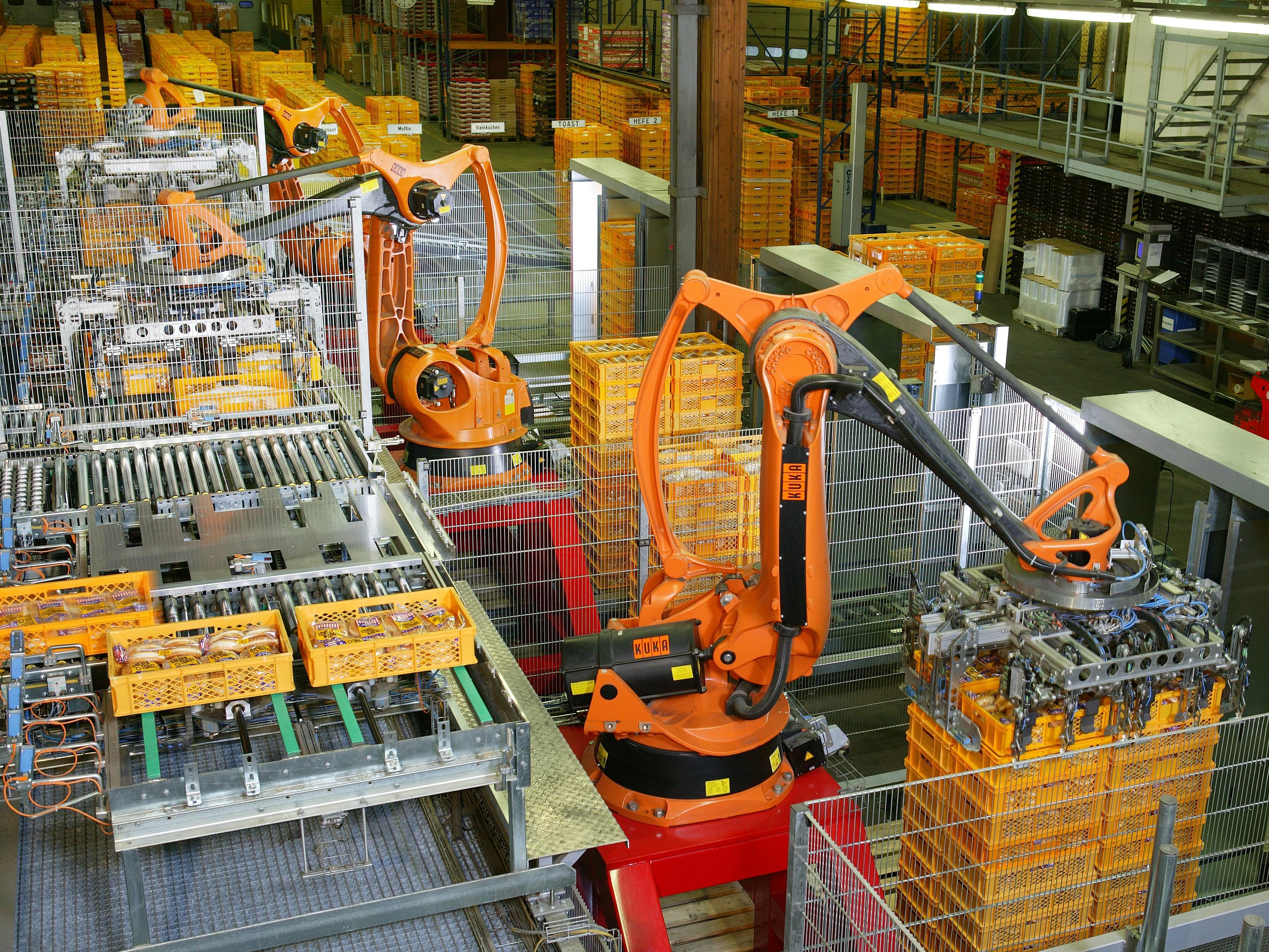
Warsaw-based robotics startup Nomagic has deployed a vision-language-action model with paying customers, cutting calls for human assistance in half. The project is led by a former star of Google DeepMind's Gemini Robotics team.
Warsaw-based startup Nomagic has announced that its new artificial intelligence model for controlling warehouse robots has moved into production with paying customers, not just laboratory testing. The company says it is one of the first deployments worldwide of a vision-language-action model outside a research setting.
Nomagic is based in Warsaw and has a second office in Sandy Springs, Georgia, in the United States. The company has spent years building warehouse robots that grip and sort goods without every movement being programmed in advance. What's new is that the robots' "brain" now runs on a model combining vision, language and action, the same family of technology behind the latest robotic systems from Google and Tesla.
Who's behind the project
Nomagic's new AI lab is led by Markus Wulfmeier, who previously worked at Google DeepMind as part of the Gemini Robotics team, responsible among other things for the post-training strategy of robot control models. His move to the Polish startup is another sign that smaller companies can attract researchers from major tech labs by offering them direct influence over a market-ready product rather than just basic research.
Wulfmeier explains the project's philosophy differently from most of the competition. Instead of aiming straight for a universal robot that can handle any task, Nomagic is first focusing on perfecting narrow, repetitive warehouse tasks, and only later building something more general from those skills.
Most of our community is racing to build the most general robot brain possible. We're betting that the harder part is actually mastering a specific task - Markus Wulfmeier, Chief Scientist at Nomagic
Industrial rigor
Nomagic CEO Kacper Nowicki stresses that the physical world doesn't forgive mistakes as easily as the world of chatbots. Robots have to work reliably in real warehouses, where a failure means a stopped line, not just a wrong text answer.
The bar in the physical world is high: 99.9 percent reliability isn't a marketing gimmick, it's the price of admission to the building - Kacper Nowicki, CEO of Nomagic
The new model doesn't yet operate independently at that level of reliability. Nomagic wraps it in classic, deterministic robotics software that takes over when the neural network isn't confident enough in its decision. This hybrid approach, now popular in industrial robotics, allows the company to use the flexibility of vision-language models without giving up the safety guarantees required on a warehouse floor.
Real-world data, not simulation
A key difference between Nomagic's approach and some of its competitors is the source of training data. Instead of relying mainly on computer simulations or teleoperation, meaning a human remotely controlling a robot to gather data, the company trains its models on data from real deployments at customer sites. Millions of package picks performed every day on production lines expose the model to conditions that are hard to fully replicate in simulation, such as unusual packaging, damaged boxes or variable warehouse lighting.
For Poland's tech industry, Nomagic's success matters beyond the company itself. Warsaw rarely features in global reports on robotics breakthroughs, and the fact that one of the world's first industrial deployments of a vision-language-action model is happening here shows that Polish engineering teams can compete with labs funded by tech giants.
What comes next
Nomagic says it plans to keep scaling the rollout to more e-commerce and logistics customers in Europe and the United States. The company has not yet disclosed funding plans for the new AI lab or a target number of robots to run the new control model. Robotics industry watchers will now be closely watching whether the narrow-specialization-before-generalization approach proves to be a lasting advantage or just a transitional stage in the race toward fully autonomous warehouse robots.
Sources: Fortune (fortune.com), TheNextWeb (thenextweb.com)