News
Kazakh Police Deploy Facial-Recognition Robot Dog to Identify Wanted Suspects
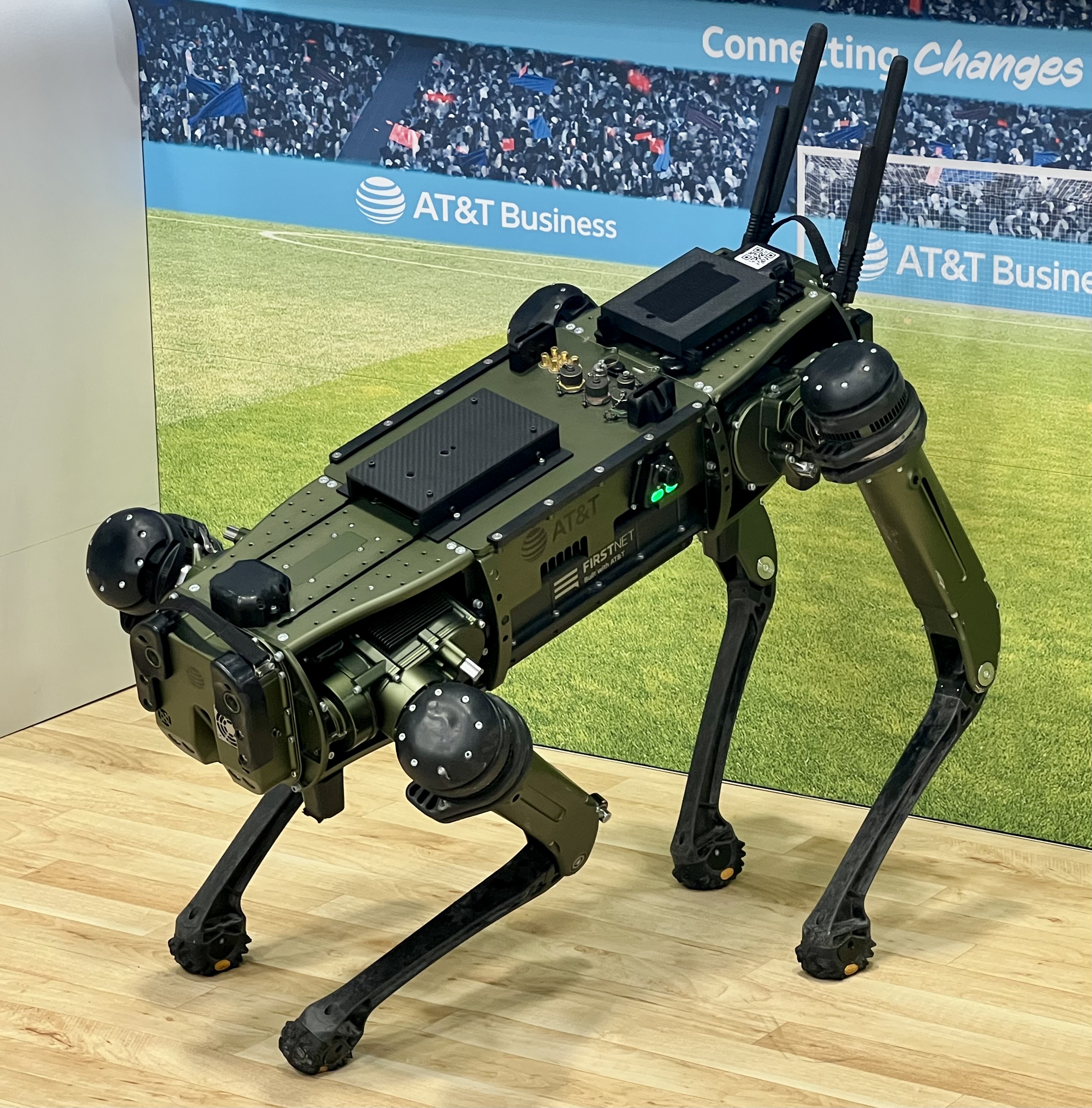
During Metallurgist's Day celebrations in Balkhash and Temirtau, Kazakh police for the first time operationally deployed a robot dog equipped with cameras and facial recognition, identifying four wanted individuals among more than 115,000 attendees.
Contents
Kazakh police tested a dog-like robot equipped with cameras and a facial recognition system on July 17 and 18, during mass celebrations of Metallurgist's Day in Balkhash and Temirtau, in the Karaganda Region. The device, integrated with police databases, helped identify four people wanted by law enforcement among a crowd of more than 115,000 people.
The robot works as a mobile camera on four legs: it scans faces within its field of view, compares them against police wanted lists, and streams live video to an operations center. The device has a built-in speaker that can broadcast warning messages to the crowd. This isn't the first time Kazakhstan has tested this kind of equipment, similar devices were previously deployed at the Nurly Zhol railway station in Astana in January and in Aktau since May.
How the Identification Works
Kazakhstan's Ministry of Internal Affairs said the robot is fully integrated with the police's unified information database, allowing an immediate comparison of a scanned face against the registry of wanted persons. Among the four people identified were a man evading alimony payments, two debtors subject to enforcement proceedings, and a person who had violated the terms of a court-ordered restriction of freedom.
However, authorities did not disclose key technical details of the operation: they did not say how many faces were scanned in total before the system flagged the four matches, what the false-positive rate was, or how officers verified the algorithm's flags before intervening. The device's manufacturer and the exact accuracy of the facial recognition software used also remain unknown.
The Scale of Surveillance in Kazakhstan
The robot test is part of a much broader surveillance infrastructure Kazakhstan has been building for several years. The country already has 1.6 million cameras, of which 545,000 are connected directly to police operations centers, and more than 24,000 have been equipped with automatic facial recognition. Police rated the robot dog test a success and announced plans to use similar devices at other large public events across the country.
Kazakh authorities also plan to expand the robot's functions beyond facial recognition alone, officials are proposing versions that would patrol public spaces, detect suspicious objects, inspect hazardous items, and move potentially dangerous objects away from people.
Privacy Concerns
The robot's deployment drew criticism from digital rights organizations in the region. The Eurasian Digital Foundation, an NGO that monitors digital rights in Central Asia, warns that the same infrastructure used to catch debtors in a crowd could just as easily be used to track activists and protest participants. The foundation recommends limits on mass, indiscriminate surveillance and greater transparency around how state bodies process biometric data.
Critics point out that the lack of public data on accuracy rates and how long scanned images are retained makes it impossible to independently assess whether the technology works as precisely as police claim. Without information on the number of false matches, it's hard to judge how many innocent people the robot may have wrongly flagged while scanning the crowd.
Regional Context
Kazakhstan has spent years expanding its video surveillance network, partly modeled on Chinese systems, and the AI robot dog marks another step toward increasingly automated control of public spaces. Other countries in the region are testing similar patrol robots, but Kazakhstan is the first to operationally deploy a facial-recognition device at a mass event rather than keeping it confined to a closed pilot.
For readers in Poland, this case shows how quickly facial recognition technology combined with robotics is moving from demonstration projects to everyday use by law enforcement, ahead of any clear legal framework governing its use at large public gatherings.