News
China Bets on Fully Unmanned Drone-and-AI Farms
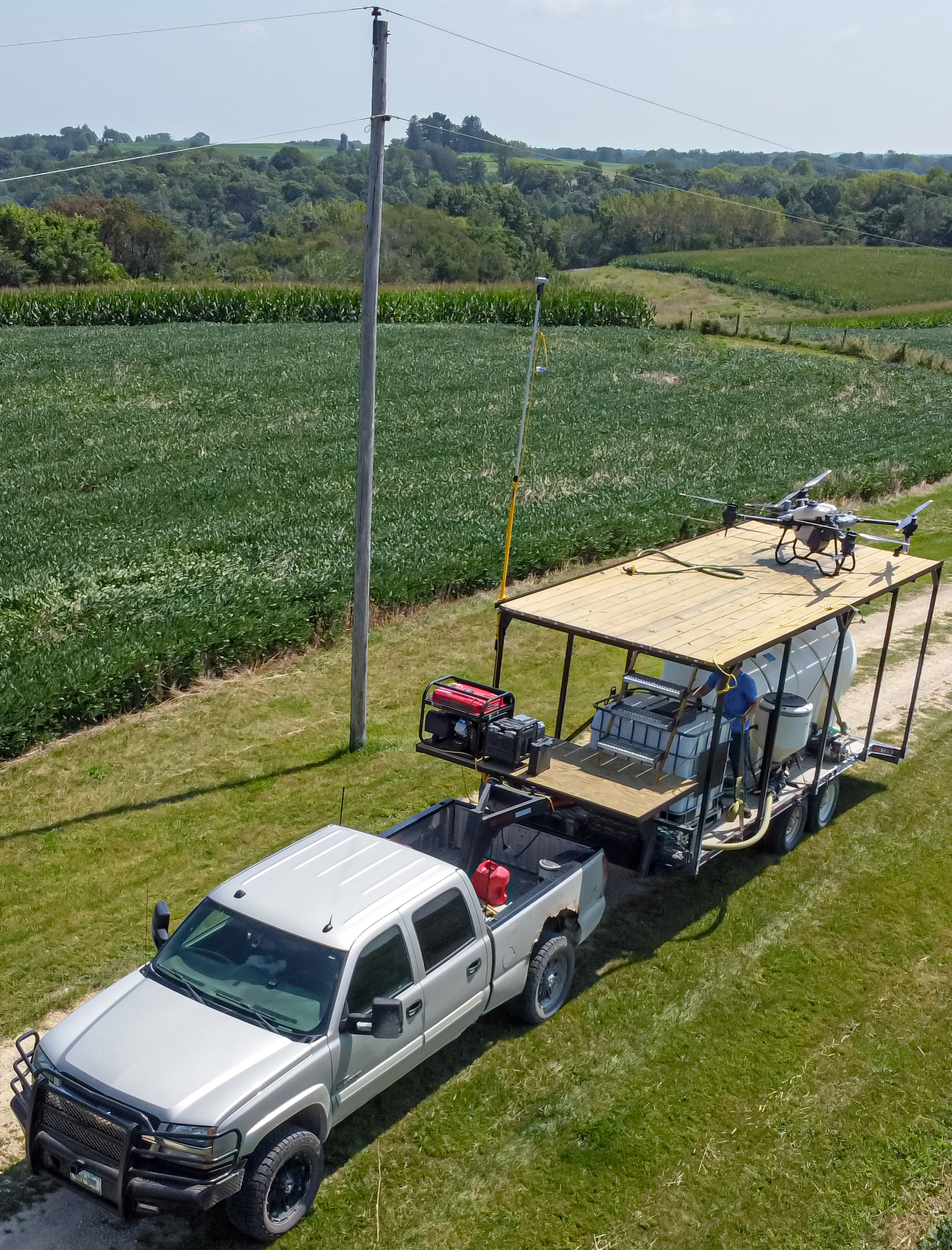
China now has more than 300,000 agricultural drones and AI systems that let farms operate with almost no human involvement, and for the first time the government has made this technology the centerpiece of its annual farm policy.
Contents
In China's agricultural provinces, more and more fields are being worked not by tractor drivers and sprayer operators, but by AI-controlled drones and operators sitting at computers far from the land. For the first time in history, Beijing has placed agricultural drones and robots at the center of its annual agricultural policy document, treating them as a technology as fundamental as the sickle and hoe once were.
The scale of the phenomenon stems from the combination of two factors: a shrinking rural workforce in China and a technology that has matured from what was an experiment just a decade ago. Drones equipped with multispectral cameras detect plant disease, nutrient deficiencies, and water stress long before the problem becomes visible to the naked eye. Based on this data, AI systems decide where and how much fertilizer or pesticide to apply, instead of spraying the entire field uniformly.
Government policy
China's Ministry of Agriculture publishes the so-called Document No. 1 every year, the first official policy document of the year, consistently devoted to rural areas, agriculture, and farmers' welfare since 2004. The February 3, 2026 edition, for the first time in this twenty-year history, made drones, the internet of things, and agricultural robots a separate, central point of strategy, alongside accelerating innovation in agricultural biotechnology and commercializing new technologies.
Drones have become an indispensable tool for many farmers, just as the sickle and hoe once were - Zhu Weidong, deputy director of the Office of the Central Finance Commission
How it works in the field
In Zigui County in central China's Hubei Province, the country's leading citrus-growing region, more than 700 drones service orchards that produce 700,000 tons of oranges a year. The drones carry fruit between rows of trees, monitor crop conditions, and carry out spraying, relieving workers of the most time-consuming tasks.
The demonstration project known as the cotton super field in Yuli County, Xinjiang, a region that accounts for most of China's cotton production, has gone even further. There, 75 percent of field operations are already fully mechanized, and smart crop management systems have achieved yields of around 520 kilograms of cotton per mu, or about 7.8 tons per hectare.
Concrete savings figures
Beyond automation itself, AI systems translate into measurable savings. In rice cultivation, smart irrigation has cut water and electricity costs per mu of paddy by up to 47 percent, pesticide use has dropped by 30 percent, and fertilization efficiency has risen by 40 percent. A single drone, combined with route-planning systems and soil sensor data, can now independently service about 500 mu of land, roughly 33 hectares, which in practice means farming without a constant human presence in the field.
Behind this transformation is also the work of research institutions, including the Chinese Academy of Sciences, which coordinates the national strategy for developing robot-assisted agriculture across more than a dozen provinces. Technology companies, including drone makers such as DJI, supply the equipment, which reaches both the domestic market and export markets, including Vietnam, where Chinese agricultural drones are gaining a share of the local rice-farming market.
What it means for the rest of the world
For agricultural countries outside China, the scale of this experiment matters practically, not just technologically. If Chinese AI systems for managing crops and drone fleets prove scalable and cheaper than Western equivalents, they could be exported along with the hardware, as is already happening in Vietnam. That means price pressure on farm machinery manufacturers and precision agriculture technology suppliers in Europe, including in Poland, where drone- and sensor-based precision farming is only just developing.
Government backing through Document No. 1 also means that the scale of deployment in China will keep growing rather than slowing down. More provinces are set to receive funding to purchase drones and IoT systems, and authorities have announced further integration of artificial intelligence across the entire agricultural production chain, from planting to harvest logistics.