News
US to Spend Over $5 Billion on AI-Powered Science Under Genesis Mission
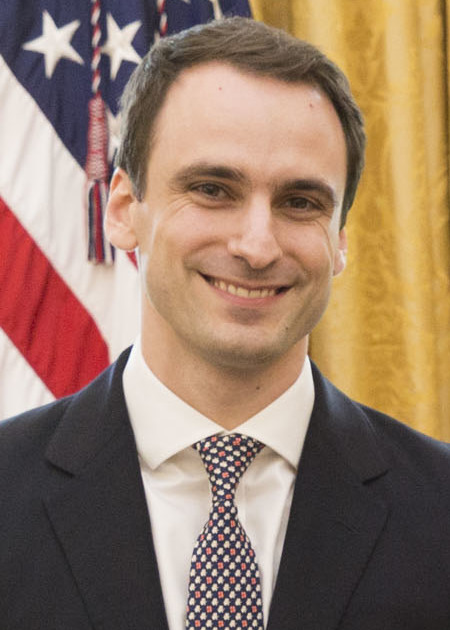
The Trump administration announced more than $5 billion in federal funding for 278 AI-powered research projects, ranging from chronic disease studies to new construction materials.
Contents
The United States government announced on July 22, 2026 that it will direct more than $5 billion in federal funding to scientific projects powered by artificial intelligence. It marks the largest phase yet of the Genesis Mission, a national program designed to harness AI to tackle scientific problems that have resisted traditional research methods for decades.
What the program covers
The funds will go to researchers working to identify the causes of chronic diseases, speed up the discovery of new drugs, and develop more durable construction materials. In total, 278 projects were selected across more than a dozen fields, from public health to energy infrastructure and industrial manufacturing.
Fifteen federal agencies are involved in carrying out the program, including the Departments of Health and Human Services, Energy, Transportation, Defense, and the Interior, along with institutions such as NASA, NIST, and the Centers for Disease Control and Prevention. The Department of Energy remains the lead agency, providing researchers with its supercomputers and computing infrastructure.
Origins of the Genesis Mission
The program was created under an executive order signed by President Donald Trump in November 2025. Its goal was to build a nationwide platform linking supercomputers, AI systems, and research tools into a single infrastructure accessible to scientists across different agencies and institutions. In December 2025, the Department of Energy had already announced that 24 technology companies, including Google, Microsoft, Amazon Web Services, OpenAI, and Anthropic, had joined the program, signing memoranda of cooperation to help build a national AI platform for science.
Friday's announcement is the first major disbursement of funds under the initiative, showing how the administration is turning eight-month-old pledges into concrete funding for specific research teams.
Role of technology companies
Beyond government funding itself, private partners are also joining the program. Microsoft has pledged to contribute $40 million in AI computing credits spread over three years, intended to let research teams run costly computations without waiting for the next round of budget allocations.
Combining public funds with private cloud resources in this way is becoming an increasingly popular model for financing large AI-driven scientific initiatives, since it allows programs to get around the budget limits of any single government agency.
America owes its greatest scientific achievements to national mobilizations paired with the building of new institutions - Michael Kratsios, Director of the White House Office of Science and Technology Policy
The 278 projects selected today represent the best of our national scientific enterprise - Chris Wright, US Secretary of Energy
Stakes in the global science race
The administration frames the program as part of a technological rivalry with China, which in recent months has itself been investing heavily in AI infrastructure and has voiced ambitions to apply it across science and industry. Washington is betting that combining government supercomputers, federal agency data, and AI models from leading companies will give American scientists an edge in the pace of discovery.
For Polish research institutions and technology companies, it is a signal of the scale at which the United States now treats computing infrastructure for science as a strategic priority, while European efforts to build their own AI gigafactories remain at an earlier stage of negotiation and funding allocation.