News
Terence Tao Warns Mathematics Is Entering an Era of AI Proof Overload
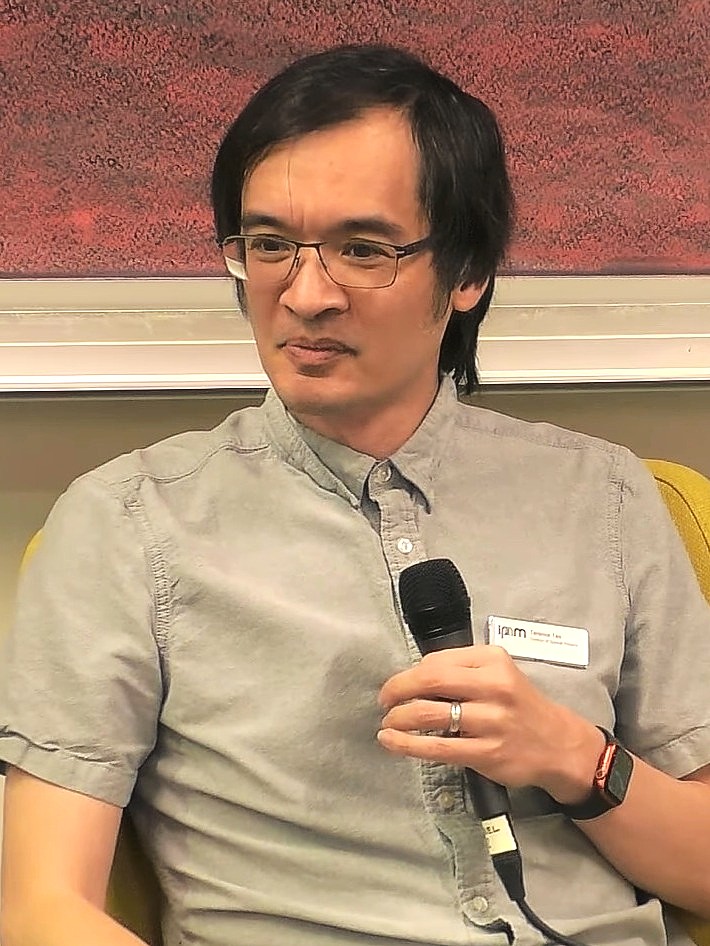
Fields Medalist Terence Tao warned at the ICM congress that artificial intelligence is beginning to produce more mathematical proofs than the field can verify and understand. He argues the bottleneck in mathematics is shifting from creating proofs to evaluating and explaining them.
Contents
Terence Tao, one of the most prominent living mathematicians and a Fields Medal laureate, announced at the International Congress of Mathematicians that his field is entering a period unlike anything it has experienced before. Instead of a shortage of mathematical proofs, researchers are starting to face an overabundance of them, increasingly generated by artificial intelligence models.
Tao's lecture, titled 'Mathematics in the Age of AI', was one of the most widely discussed talks of this year's congress. Rather than focusing on whether artificial intelligence can handle advanced mathematics, Tao pushed the discussion a step further: given that the evidence increasingly suggests it can, what should the mathematical community now optimize for, and what must it defend at all costs.
From Skepticism to Acceptance
Tao's views did not shift overnight. In 2022, after his first encounter with ChatGPT, he praised the model's fluency but pointed to a lack of depth in its reasoning. By late 2024, testing the o1 model, he rated it as 'a mediocre, but not completely incompetent graduate student.' In early 2026, he acknowledged that his earlier forecast from years before had come true almost to the day, the model had reached a level comparable to a junior research co-author.
The turning point came at the March IPAM conference 'Accelerating Math and Theoretical Physics with AI', where Tao announced that AI tools are 'ready for primetime', since in mathematics and theoretical physics they save more time than they waste. Day to day, he uses the models to search scientific literature, write code, generate plots, and quickly check whether a given approach to a problem makes sense at all before investing weeks of work in it.
A Crisis of Values, Not Capability
The central thesis of the July lecture sounds different from Tao's earlier statements. The mathematician argues that the field faces its first crisis of values and practices in a hundred years, not a crisis of capability. Since AI models can already generate proofs at scale, the question is no longer whether they can, but what the community should do about it.
Tao broke the process of producing a proof down into five stages: generation, verification, exposition, publication, and incorporation into the body of accepted knowledge. In his view, AI radically speeds up the first stage, but creates serious bottlenecks at the stages that require human understanding and community consensus.
In mathematics we can fully check and verify results, and that really filters out a lot of nonsense - Terence Tao
The Bottleneck Is Shifting
According to Tao, the real constraint is no longer producing a proof but determining which proof can be trusted. He describes this as a variant of Simpson's paradox: the quality of individual results is rising, but the overall signal-to-noise ratio across the field is worsening, because AI accelerates generation far more than it accelerates exposition and explanation of results. He also warns of the contamination of open problems, AI's uncontrolled solving of known, unresolved questions destroys their value as drivers of research, which he compares to spoiling a movie's ending.
Three Recommendations for the Field
Tao laid out concrete proposals for the mathematical community. First, he calls for normalizing the explicit disclosure of AI involvement in research work, along with publishing full logs of conversations with the models. Second, he wants to reduce the prestige attached to being the first author of a solution in favor of work devoted to explaining and organizing results. Third, he proposes making publication contingent on authors' ability to present their results live before experts.
In a May 2026 interview with Nature magazine, Tao stressed that the scientific community must work out the answers to these questions itself, before technology companies developing AI models do it for them.
If we don't ask these questions ourselves, they will be settled for us by a technology company - Terence Tao
For Poland's scientific community, Tao's remarks carry significance beyond mathematics alone. Similar questions about the role of AI in peer review, publishing, and authorship attribution also apply to physics, theoretical computer science, and engineering, fields pursued at Polish universities and research institutes, where language models are increasingly supporting work on formal proofs and code verification. Tao himself sums up his position in a short formula: current models are 'unreliable, but powerful', meaning they require interactive use and constant human verification of results.