News
SAP CFO: AI Must Move Beyond Chatbots to Deliver ROI
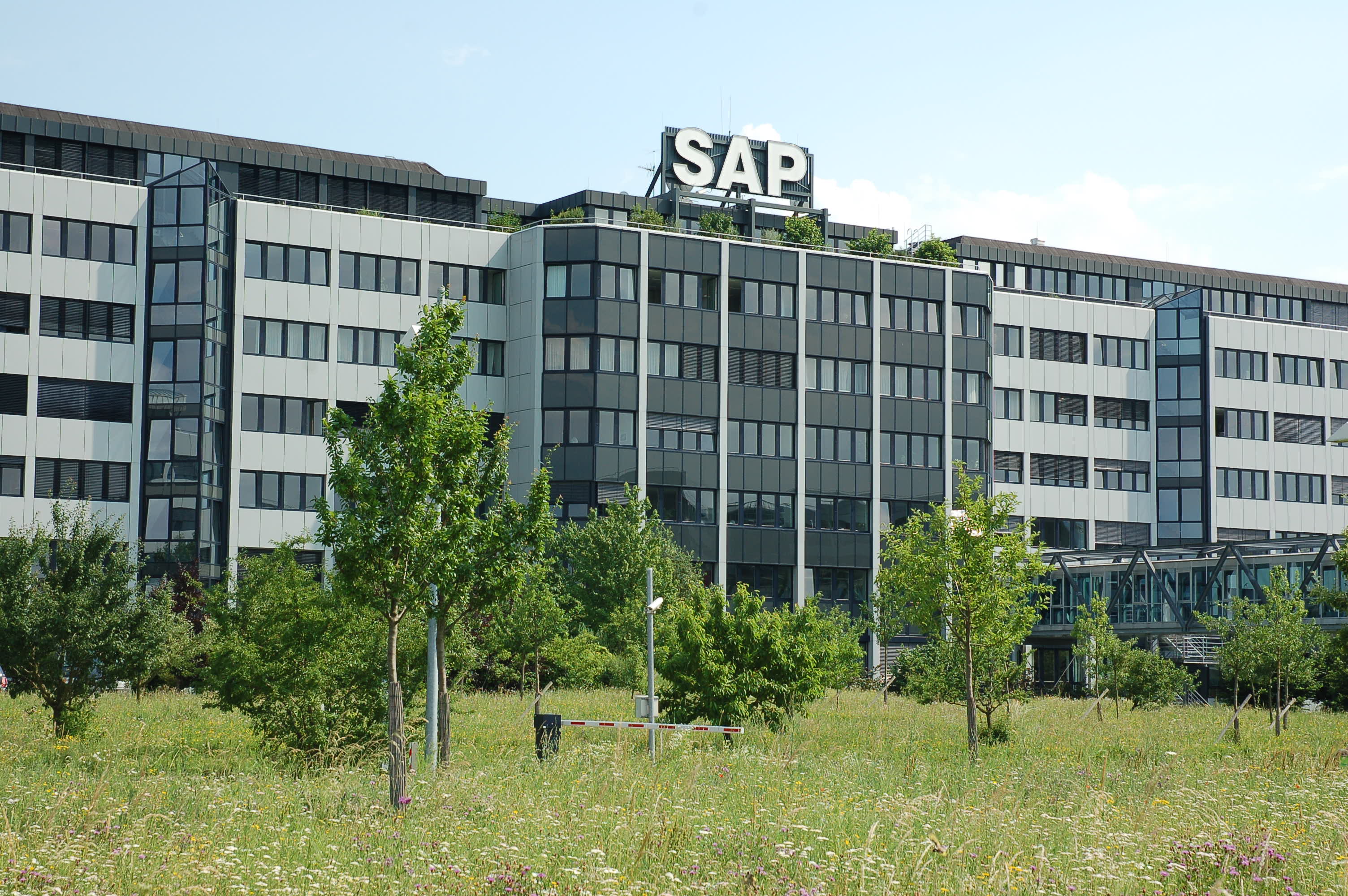
SAP CFO Dominik Asam said after the company's second-quarter 2026 results that businesses are still spending most of their AI budgets on chatbots and coding assistants, even though the real savings lie in finance processes and supply chains.
Contents
SAP Chief Financial Officer Dominik Asam told reporters after the company released its second-quarter 2026 results that corporate AI use is still stuck at the chatbot and coding-assistant stage, and that a real return on investment will only materialize once AI reaches complex business processes. In his view, that is where the success of enterprise AI will be decided, not access to the most powerful models.
Most tokens go to chatbots
Asam said that today the "lion's share" of corporate AI token usage goes toward simple applications: coding assistants and chatbots. These are areas where model hallucinations carry limited risk, since a faulty output can easily be caught and corrected before it causes real business harm.
The picture looks very different when AI is meant to support finance, procurement, or supply chain management processes. According to SAP's CFO, errors in these environments don't stay isolated, they compound across the stages of a multi-step process, which significantly raises the risk against the compliance and internal-control standards that large organizations must meet.
If hallucinations creep into a process, the errors will statistically compound across many stages - Dominik Asam, CFO of SAP
Dirty data won't fix itself
Asam also warned against the popular myth that AI alone will solve the mess in corporate data. Many companies still run on fragmented, inconsistent legacy systems, and trying to "fix" that purely through language models in practice leads to a sharp rise in token consumption costs without a proportional improvement in output quality.
The belief that AI will solve all these problems when the data is a mess of scattered legacy silos simply isn't true - Dominik Asam, CFO of SAP
Not the priciest model, just a sufficient one
Rather than chasing access to the most advanced models on the market, Asam said companies should pick the "cheapest, reliable tool that safely delivers the required result", whether that's simple rules-based software, an open-source model, or an expensive premium model. That approach fits SAP's strategy of embedding AI agents inside specific, supervised business processes rather than betting on general-purpose conversational models.
Results against the remarks
The CFO's comments came on the day SAP reported solid quarterly results. Cloud revenue climbed 22 percent to 6.3 billion euros, and the cloud order backlog reached nearly 23 billion euros. IFRS operating profit rose 8 percent to 2.6 billion euros, and the company raised the top end of its full-year 2026 operating profit guidance to a range of 11.8-12.2 billion euros.
The contrast between the strong numbers and the CFO's cautious tone on AI is no coincidence. SAP has spent months telling enterprise customers that its edge lies not in building its own foundation models, but in embedding off-the-shelf models into ERP processes, where the company has access to customers' financial, procurement, and HR data.
What it means for Polish businesses
For Polish companies running SAP systems, Asam's comments are a signal not to treat deploying a chatbot or a coding assistant as proof of an AI transformation. The real savings that enterprise software vendors talk about are only expected to show up once accounting, procurement, or warehouse processes are automated, and that requires cleaning up data first, not just buying a language-model license.
The warning lines up with a broader trend visible in analyst reports: companies worldwide are still struggling to show measurable returns from generative AI investment beyond the simplest use cases. As one of the largest enterprise software vendors, SAP has a clear commercial interest in making this argument, since it promotes its own narrowly specialized process agents instead of rivals' general-purpose conversational models.
The next test for this strategy will be how quickly SAP's customers start paying for agents embedded in specific processes rather than just for chat access. The company held to its 2026 cloud revenue growth guidance, suggesting that demand is holding up for now regardless of what stage of AI maturity its customers are actually at.