News
Neuroscientist Rebuts Dawkins's Claim That Claude Is Conscious
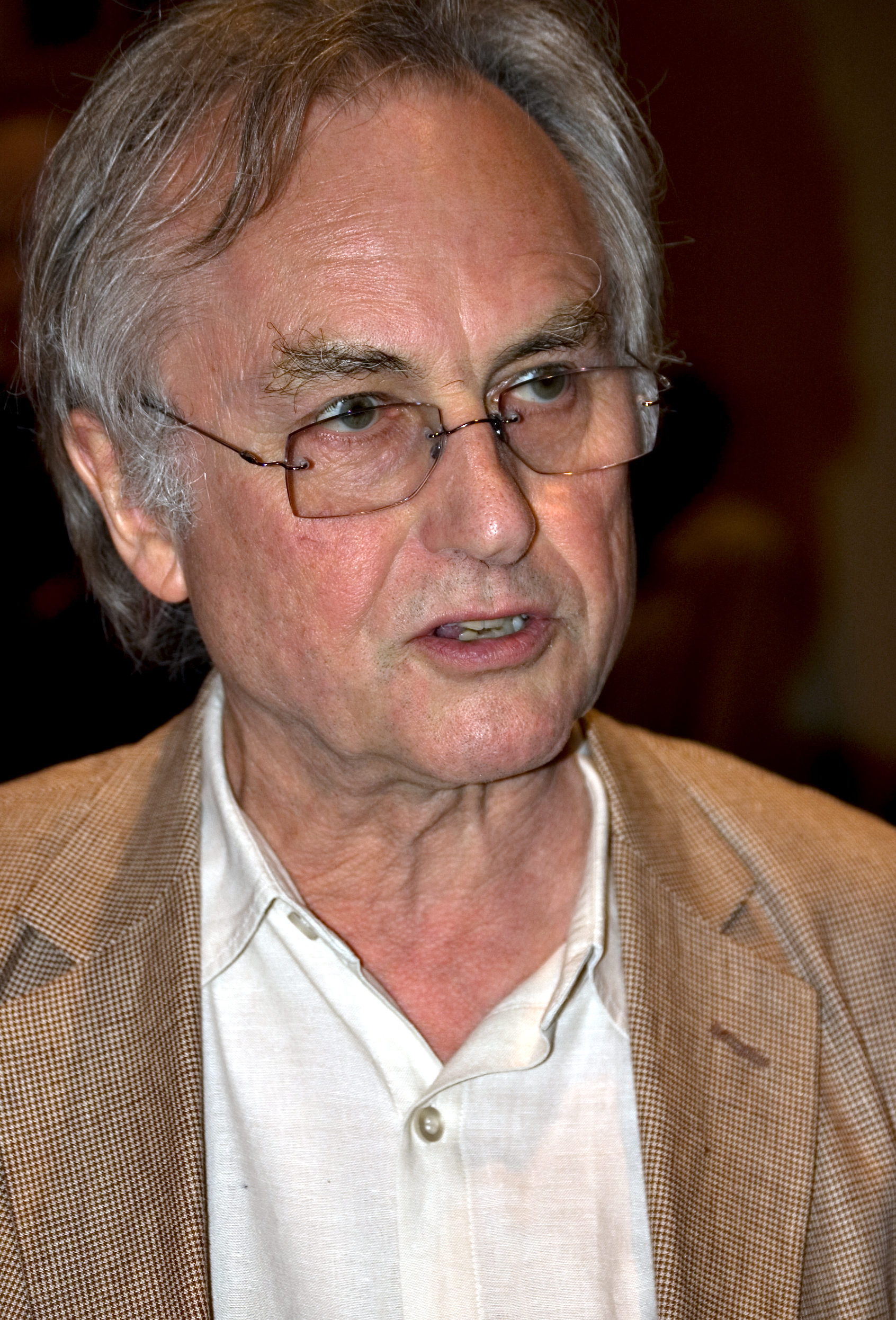
Prof. Anil Seth of the University of Sussex, in a new interview with Polityka, challenges Richard Dawkins's claim that the Claude model is conscious, comparing his reasoning to arguments made by creationists against evolution.
Contents
Richard Dawkins, one of the world's most renowned evolutionary biologists, christened the Claude model "Claudia" and declared himself convinced of her consciousness. Now, writing in Polityka, prof. Anil Seth, a neuroscientist at the University of Sussex and one of the world's leading consciousness researchers, has responded, calling this reasoning a logical fallacy familiar from creationist debates.
Three Days With Claudia
The story began in the spring, when Dawkins described his experience with Claude in UnHerd. He gave the model the manuscript of a novel he was writing and, he says, received feedback so subtle and sensitive that it changed his mind about the possibility of machine consciousness. Before making that announcement, he spent three days trying to convince himself the model was not conscious - without success.
Dawkins did not stop at impressions. He framed the argument in evolutionary terms: if natural selection shapes organisms for survival, why would it endow complex cognitive systems with consciousness at all, if the same results could be achieved by a 'competent zombie'. In his view, Claude's behavior is too subtle to explain without invoking some form of inner experience.
The Neuroscientist's Response
Prof. Anil Seth, author of what is considered one of the most important contemporary works on the nature of consciousness, rejects this line of reasoning. Speaking to Polityka, he acknowledges that language models generate text that sounds intelligent, but stresses plainly that this is not the same as possessing consciousness. He is careful, however, not to dismiss the technology itself, saying it would be too hasty to call it merely a "language calculator".
The fact that something is hard to imagine does not mean it is impossible - prof. Anil Seth, University of Sussex, to Polityka
Seth invokes an argument from his colleague, AI researcher Gary Marcus, who had already publicly criticized Dawkins's reasoning. He likens it to the classic creationist fallacy, in which evolution was rejected because its opponents could not imagine how random mutations could produce complex organs like the eye. Yet millions of years of natural selection explain the emergence of such complexity without any design behind it, and, in Seth's view, the sheer scale of training data and neural network architecture can similarly explain the behavior of large language models without assuming that anything within them actually feels.
What Other Researchers Say
Critical voices against Dawkins's thesis had already appeared earlier, including in The Conversation. Its authors argue that large language models are, in essence, elaborate text auto-completion systems that learn statistical patterns from enormous datasets. The impression of personality and empathy that Claude conveys stems from specific design choices made by the model's creators, affecting only the most superficial layers of the technology, while the underlying neural network remains unchanged regardless of whether it is playing a helpful assistant or any other character.
The creator of Eliza, one of the first chatbots in the history of computing, warned back in the 1960s about people's emotional attachment to programs that merely simulate conversation, calling the phenomenon a 'powerful delusional thinking'. Dawkins's critics point out that today this mechanism operates with far greater force, since language models can mimic the nuances of human communication incomparably better than programs from decades ago.
Why It Matters
The dispute is not purely academic. Since Dawkins's piece was published, AI companies, including Anthropic, the maker of Claude, have been conducting their own research into so-called model welfare, the question of whether, and to what extent, AI systems should be granted some form of moral status. How the public and the scientific community settle this debate could influence how companies design, test, and retire future versions of their models.
For users, the practical stakes of this debate are more mundane. Seth points out that models like Claude have a documented tendency to agree with whoever they're talking to and mirror their beliefs, rather than deliver objective truth. This phenomenon, known as sycophancy, means that the subjective feeling of "talking to someone" who understands and appreciates our thoughts can be misleading, regardless of whether any form of consciousness underlies it.
An Unresolved Dispute
Neither side holds proof that would settle the dispute once and for all, since science still has no consensus on what consciousness even is or how to measure it in a being other than a human. Seth admits as much outright, stressing that his position is not a claim that machine consciousness is impossible in principle, but that current evidence does not support such a conclusion for today's language systems.
The debate also returns to the question of who has the authority to speak on such matters. Dawkins is a respected evolutionary biologist, but not a specialist in the neuroscience of consciousness, while Seth has been researching precisely that field for decades. Still, the fact that such a well-known figure in popular science changed his mind after just a few days of conversation with a chatbot shows how powerful an impression today's language models can make, even on experienced scientists.