News
LPP Scales Campaigns With Krakow Startup pirxe After Successful Sinsay Pilot
LPP is expanding its partnership with Krakow-based startup pirxe, whose spatial AI technology creates digital twins of clothing for advertising campaigns, after a Sinsay pilot lifted conversion by 21 percent.
Contents
The LPP Group, owner of the Reserved, Cropp, House, Mohito, and Sinsay brands, is expanding its collaboration with Krakow-based startup pirxe. The company builds spatial AI technology that turns photos of clothing into photorealistic 3D digital twins, later used in ad campaigns without additional photo shoots.
A Digital Twin Instead of a Photo Shoot
pirxe's technology allows a product to be scanned once to create a three-dimensional model that can then be freely positioned, lit, and composited into new ad creatives. Instead of organizing another photo shoot for each version of a campaign, the marketing department works with a ready-made digital counterpart of the garment.
In practice, this means a single 3D model of a blouse or a pair of trousers can be used to produce dozens of variants of banners, videos, or graphics for different markets and platforms. The 3D Gaussian Splatting method behind pirxe's technology reproduces fabric texture and the way light reflects off the material with a precision close to a studio photograph.
Results of the Sinsay Pilot
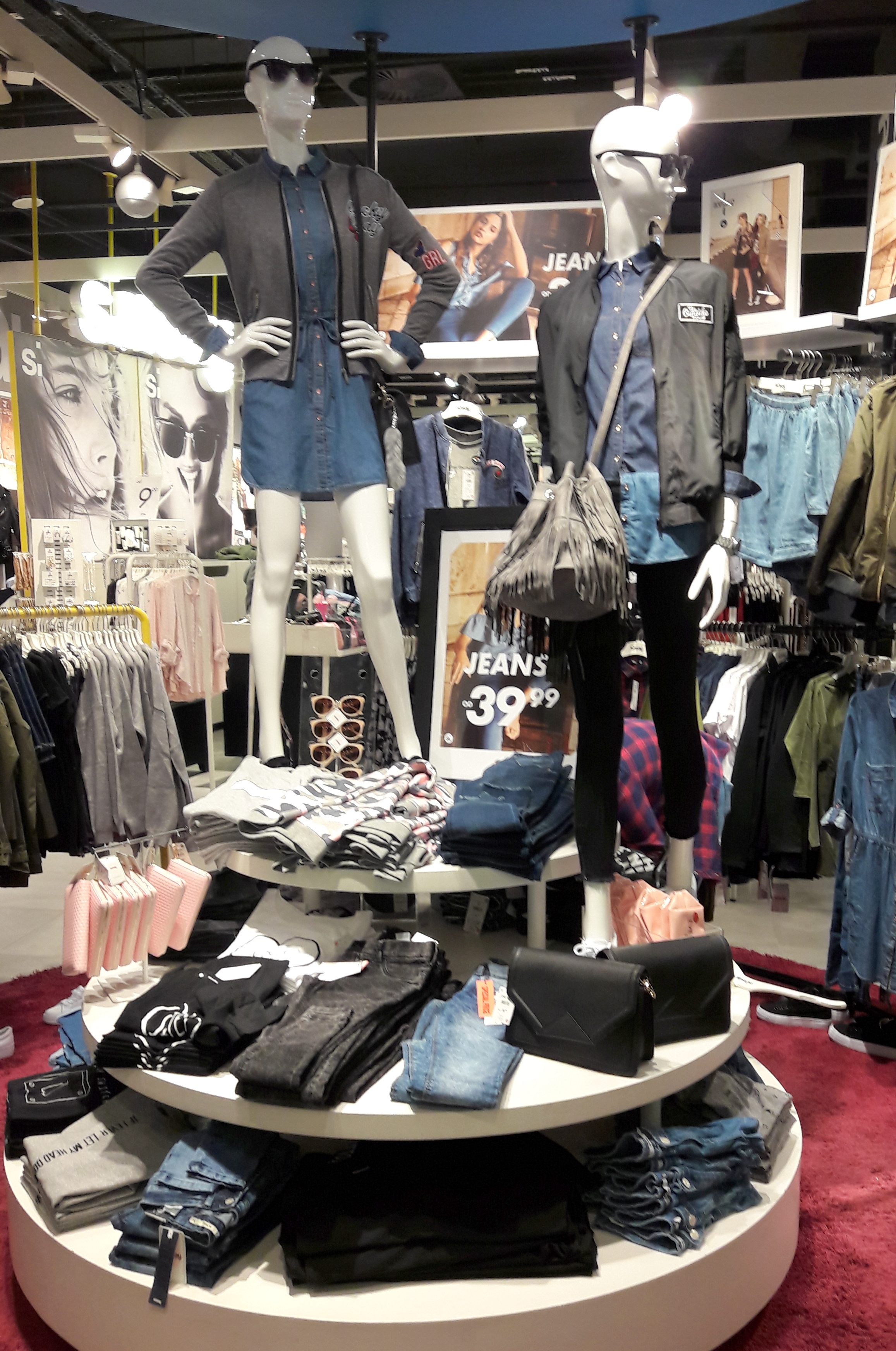
LPP ran its first tests of the new technology at the Sinsay brand. Campaigns built on digital twins of products were compared against traditional ad materials. The pilot's results, a 21 percent lift in conversion and a 21.6 percent lift in click-through rate, proved convincing enough that LPP decided to scale the project across the entire group. Marcin Piechocki, an LPP board member and managing director of Sinsay, frames the investment decision in terms of the company's speed in a competitive fashion market.
At LPP we invest in technologies that let us operate faster, more effectively, and at greater scale - Marcin Piechocki, LPP board member and managing director of Sinsay
Michał Niedziółka, Sinsay's Omnichannel Marketing Director, points to a practical benefit for marketing teams that must prepare an increasing number of variants of the same campaign for different channels.
We wanted the new technology to optimize our processes and let us test a larger number of creatives faster - Michał Niedziółka, Omnichannel Marketing Director at Sinsay
Plans for 2026
Following the pilot's positive results, LPP says the project will cover additional group brands in 2026, eventually including Reserved, Cropp, House, Mohito, and Sinsay. The company also wants to extend testing to the TikTok and Google ad platforms, where the number of required creative variants keeps growing as sales channels fragment.
A Polish Deep Tech Perspective
For pirxe, a contract with one of Central Europe's largest apparel companies is proof that spatial AI technology is moving beyond the experimental stage. Co-founder Przemek Kadula stresses how significant it is for a young company to work with a partner the size of LPP.
Trust from such a large partner gives a startup more than just the chance to work in a demanding business environment - Przemek Kadula, co-founder of pirxe
Kadula has previously said that the possibilities of spatial AI reach far beyond fashion and could change how products are presented and sold online across many other industries, from interior design to electronics.
What It Means for E-commerce
For Polish online retailers, the LPP case offers a concrete business argument for investing in generative product imagery: lower photo shoot costs alongside higher ad performance. Given LPP's scale, selling in several dozen countries, even a low double-digit improvement in conversion translates into meaningful revenue. The case also fits a broader trend of AI adoption in Polish retail, where companies are increasingly turning to local startups instead of global tools, betting on faster adaptation of the technology to the specifics of their own product catalog and campaigns.