News
Jeff Bezos and UK Government Invest $450 Million in CuspAI
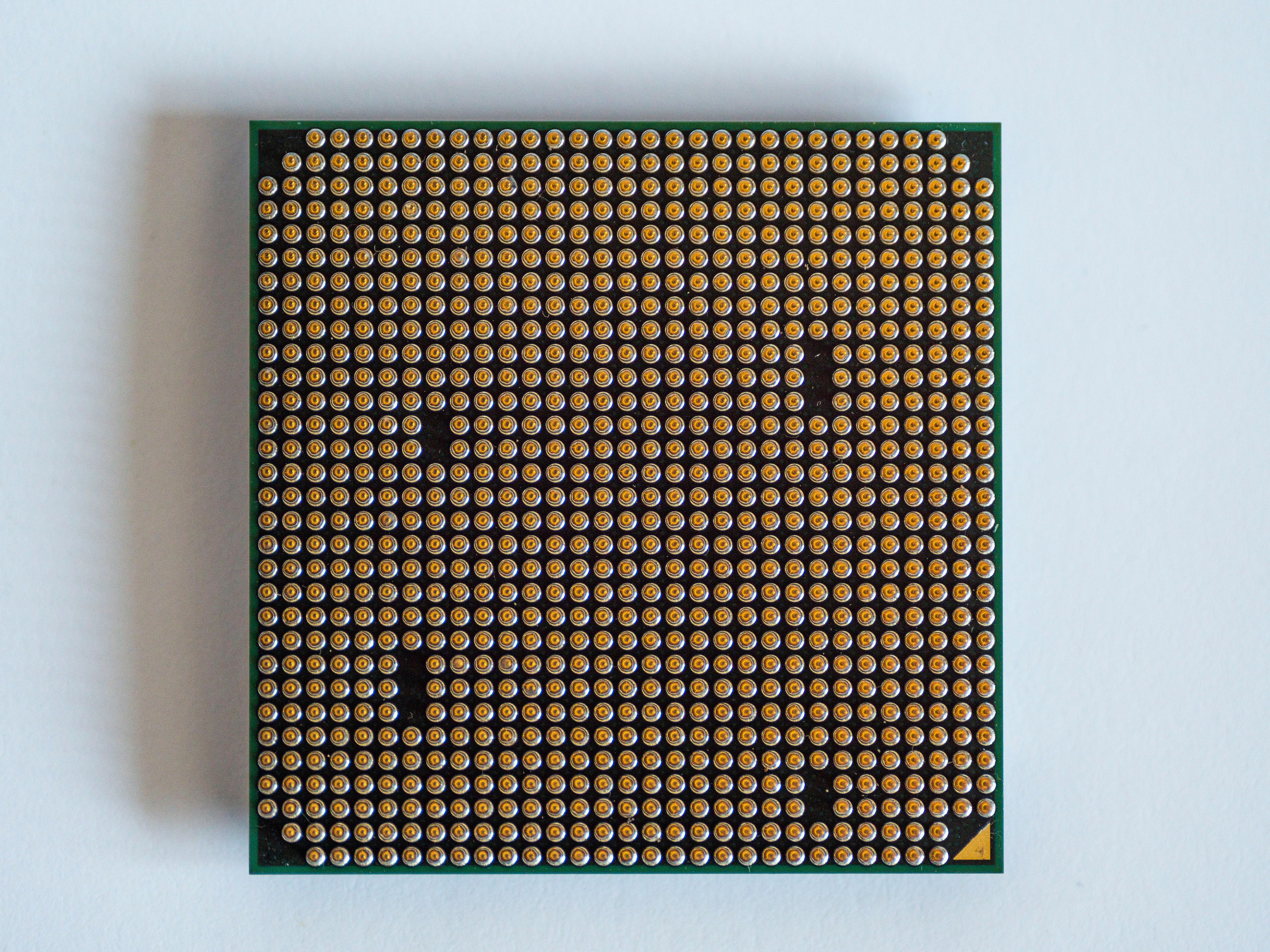
British startup CuspAI, which uses AI to discover new materials for the semiconductor industry, has raised $450 million at a $2.6 billion valuation. Investors include Jeff Bezos and the UK government's Sovereign AI Venture Fund.
Contents
Cambridge-based startup CuspAI has closed a $450 million Series B funding round that values the company at $2.6 billion. Investors include Jeff Bezos through his Bezos Expeditions fund and the UK government's Sovereign AI Venture Fund, making this round one of the most notable cases of direct state involvement in a private AI startup in Europe.
CuspAI was founded in March 2024 by Chad Edwards, a chemist and serial deep-tech entrepreneur previously affiliated with Cambridge Quantum Computing, and Max Welling, a renowned Amsterdam-based machine learning researcher. The company built an AI platform it describes as a materials search engine: users specify desired properties such as strength, conductivity or thermal resistance, and the system proposes possible chemical compositions up to ten times faster than traditional research methods.
Where the Funding Came From
The Series B round was co-led by venture capital firms Kleiner Perkins and New Enterprise Associates. Investors also included Jeff Bezos's Bezos Expeditions, Glade Brook Capital Partners, Lux Capital and AMD Ventures, alongside existing shareholders Temasek and Prosus. A separate line on the investor list belongs to the UK government's Sovereign AI Venture Fund, its fourth investment to date, set up to help early-stage British AI companies expand internationally.
The UK government did not disclose the size of its stake in CuspAI. The fund typically takes stakes worth between £1 million and £10 million and requires recipients to keep their main headquarters in the UK and have British-founded origins, conditions CuspAI meets as a Cambridge-based company.
Materials for the Chip Industry
The technological core of CuspAI is a platform called MIRA, which runs research projects from AI-generated structure proposals through computer simulations and synthesis-path planning to coordinating lab tests. The company focuses partly on materials for the semiconductor industry and is working to eliminate scarce rare metals such as ruthenium and iridium from chip manufacturing.
Alongside the funding round, CuspAI announced the launch of the AI Materials Foundry coalition, bringing together more than 45 technology and industrial organizations from the US, Asia and Europe. Partners include Nvidia, Meta, Samsung, Hyundai Motor Group, Lam Research, Henkel, Applied Materials and Tokyo Electron. These companies are expected to share computing power, lab access and scientific expertise, creating a shared, repeatable process for discovering new materials.
If we don't move fast enough, the next fifty years of industrial progress will be limited by a single challenge: the world needs materials that don't yet exist - Chad Edwards and Max Welling, co-founders of CuspAI
Advisory Board and Expansion
CuspAI's advisory board includes Yann LeCun and Geoffrey Hinton, two of the most recognizable figures in AI research, recently joined by Abhi Talwalkar and John Giannandrea. The company announced it will open a new office in Singapore and expand its teams in the UK, the Netherlands, Germany, Japan and the United States.
CuspAI's valuation jump from $520 million to $2.6 billion in under ten months reflects a broader trend of venture capital investors seeking AI exposure beyond language models themselves, in industrial applications where generative systems are expected to compress years of lab research into weeks or months.
What It Means for Europe
The UK government's involvement in a commercial startup funding round fits into a broader push for technological sovereignty, a topic increasingly discussed in Poland and other EU countries as well. The Sovereign AI Venture Fund is meant to help British AI companies keep their intellectual property and headquarters in the country, rather than letting foreign funds or corporations acquire them at an early stage.
For Europe's materials science sector and chip industry, CuspAI's round shows that one of the continent's few deep-tech companies has managed to attract capital comparable to rounds raised by US AI leaders, while keeping its research base in Cambridge. That could become an argument in the debate over where to direct future investment in Europe's AI-related research infrastructure.