News
Humanoid Robot Surgie Performs First Surgical Operations
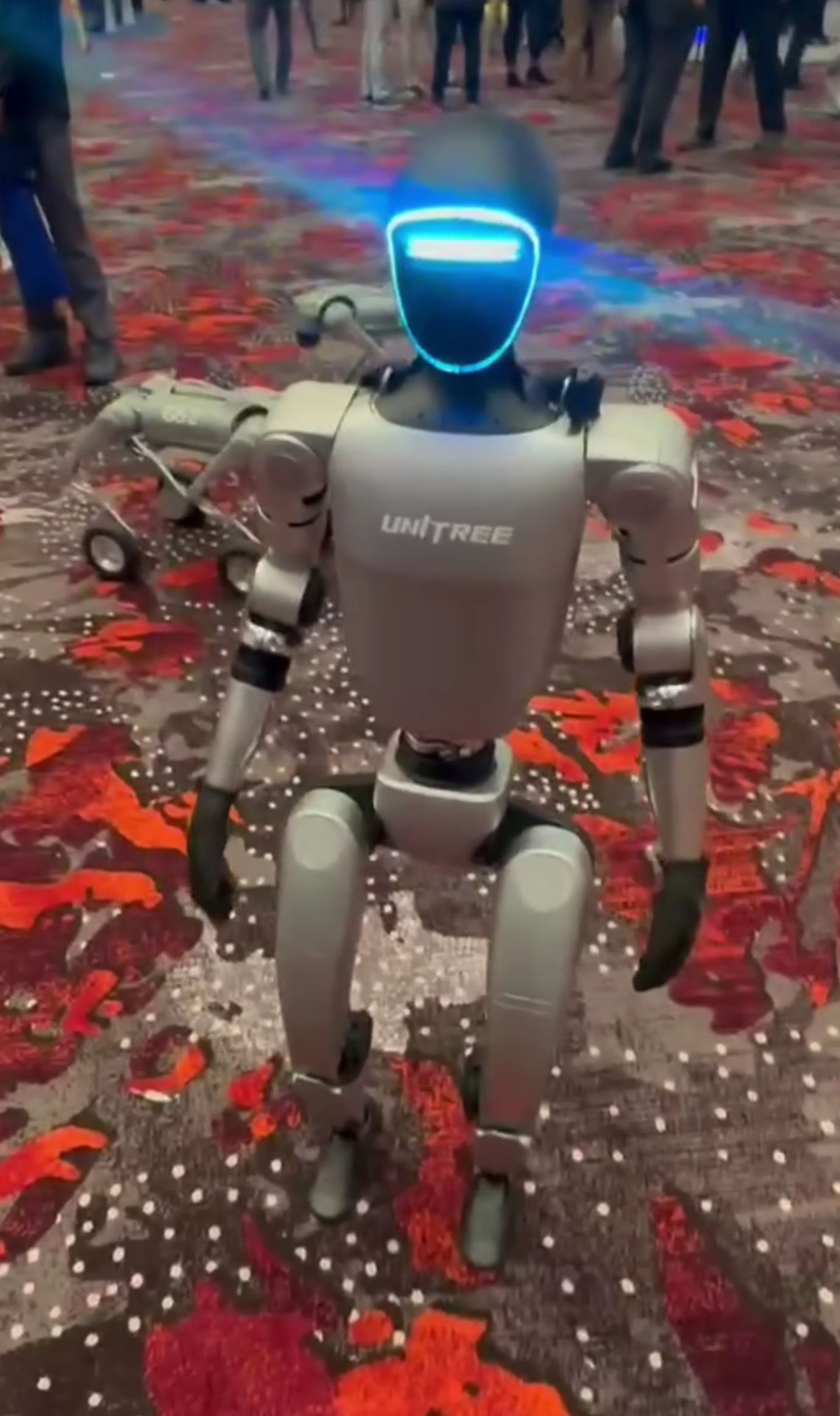
Researchers at the University of California San Diego built the humanoid surgical robot Surgie on the Unitree G1 platform, which performed two gallbladder removal operations on pigs under remote human supervision. The results were published in the journal Nature.
Contents
A team of engineers and surgeons at the University of California San Diego has carried out two gallbladder removal operations using a humanoid robot named Surgie. It's the first documented case of a human-like machine performing a full surgical procedure under remote human supervision, with the results of the experiment published in the journal Nature.
Inside the Operations
Both procedures were cholecystectomies, the removal of the gallbladder, a standard, well-understood operation that researchers chose precisely because its course is predictable and easy to evaluate for success. The robot performed the first operation alongside a human surgeon acting as an assistant. In the second trial, two robots worked in the operating room at once, with no physician physically present at the table.
Once fitted with the right adapters, Surgie can hold and operate standard surgical instruments, the same ones used by human surgeons. Control is remote: an operator directs the robot's movements from another room or location, and the machine translates those commands into precise movements in the surgical field.
Why Weight and Cost Matter
The key argument for this approach is the difference in cost and size compared with current surgical robotics systems. The flagship da Vinci system, a standard in many hospitals worldwide, weighs over 800 kilograms, takes up an entire specially modified operating room, and costs anywhere from half a million to several million dollars. Surgie, built on the mass-produced Unitree G1 platform, weighs under 30 kilograms, and the base platform itself costs around $13,500.
It's a fraction of the cost and takes up a fraction of the space in the operating room. That makes it easy to deploy anywhere, from rural areas to the battlefield to space - Shangleil Liu, Assistant Professor of Surgery, University of California San Diego
Latency and Calibration
The researchers don't hide the fact that the system still has serious limitations. The biggest problem turned out to be latency, the delay between the controlling surgeon's movement and the machine's response in the surgical field. The first attempts required repeated recalibration and took noticeably longer than a comparable procedure performed with classical methods. The team notes that the control itself was rated as intuitive and natural, but connection stability over longer distances remains the main challenge before the system can move beyond lab conditions.
Future Plans
The study's authors see applications for humanoid surgical robots in places where traditional systems are too expensive or too unwieldy. They point to isolated rural communities, areas hit by natural disasters, and even space missions, where transporting bulky equipment is practically impossible. Looking further ahead, the team wants to expand the robot's capabilities beyond operating itself, handing over instruments, preparing the room, or cleaning up after a procedure, with the goal of a fully autonomous surgical assistant.
Both operations were performed on animals as part of preclinical research, not on humans. That's an important caveat: the path from a successful experiment on pigs to a regulator-approved system used in real hospitals typically takes years of safety testing and institutional approvals.
What It Means for Poland
For Poland's healthcare system, where access to expensive surgical robotics is still limited to the largest centers in big cities, a cheaper and lighter alternative could in theory open the door to remotely operated surgery in smaller county hospitals. That's still a distant prospect, but the direction of the research shows that the barrier to entry for medical robotics could drop sharply in the coming years, much as it did earlier with industrial robots built on mass-produced platforms.