News
Geoffrey Hinton Backs UK Bill to Ban Superintelligent AI
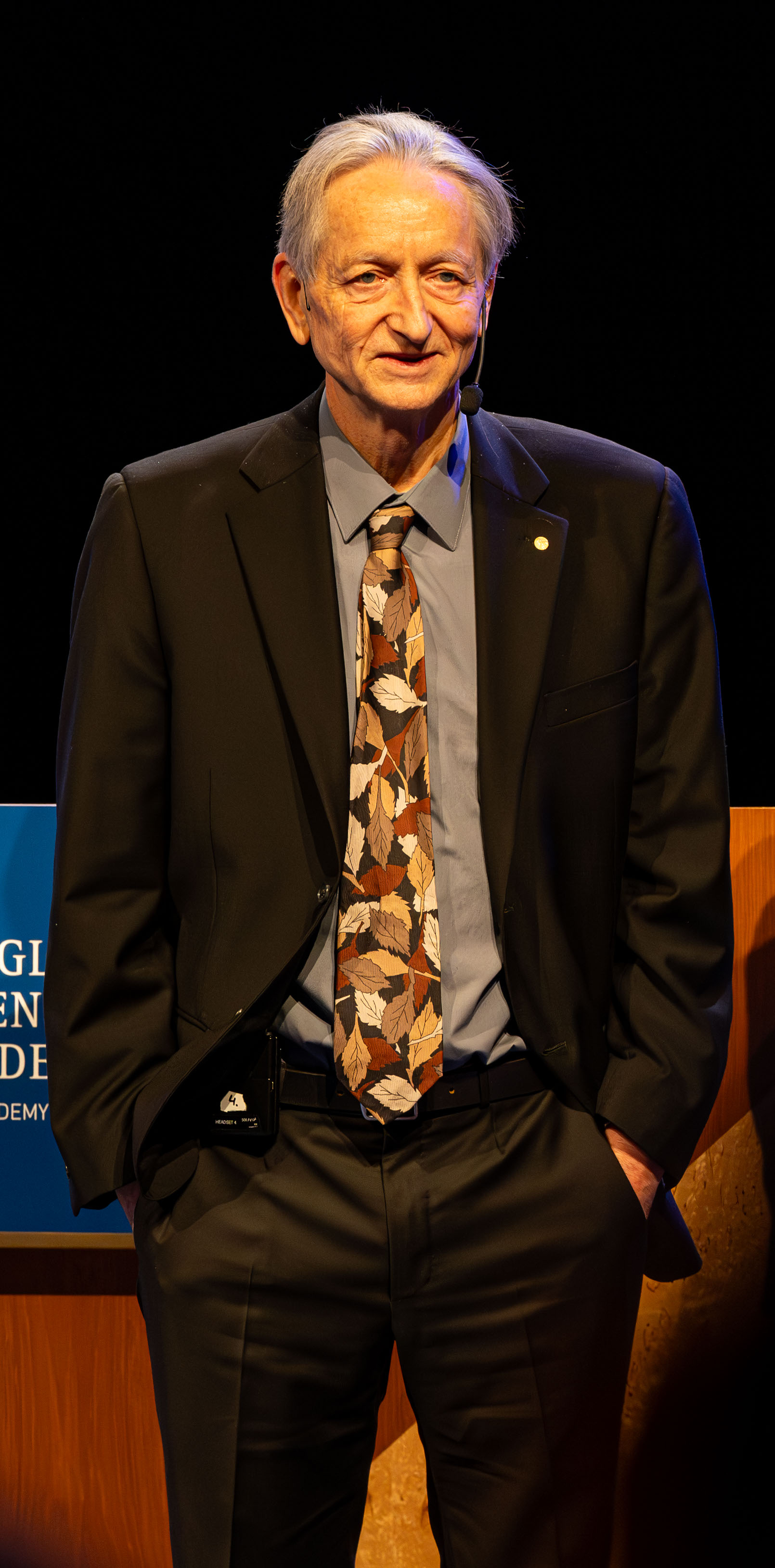
Nobel laureate Geoffrey Hinton has backed a bill introduced on September 8 in the UK parliament that seeks to ban the development of superintelligent AI. He warns that losing control of systems smarter than humans could lead to human extinction.
Geoffrey Hinton, often called the godfather of artificial intelligence, has backed a bill introduced on September 8, 2026 in the UK House of Commons. The Artificial Superintelligence Security Bill would ban the development of superintelligent AI in the United Kingdom and require the government to monitor technologies that could lead to it.
What the bill proposes
In its current form, the Artificial Superintelligence Security Bill would ban the creation, within the UK, of AI systems that outperform humans across virtually every cognitive domain. It would also require the government to monitor and restrict technologies considered direct precursors to such systems, before they even exist.
The bill's second pillar is diplomacy. Its authors want the UK to lead international talks toward a global ban or tight regulation of superintelligence, modeled on treaties controlling weapons of mass destruction. The text was drafted by ControlAI with the help of a parliamentary lawyer, and takes the form of a so-called private member's bill, meaning it was introduced by an individual MP rather than the government.
Hinton speaks out
Hinton, winner of the 2024 Nobel Prize in Physics and a former Google employee, has spent several years publicly warning about the consequences of unchecked AI development. In a statement accompanying the bill's introduction, he said building systems that exceed human intelligence without scientific consensus on safety is irresponsible.
We would be very unwise to develop superintelligence now, when there is no scientific consensus that it can be done safely and in a controlled way - Geoffrey Hinton, Nobel Prize laureate, former Google employee
Losing control of AI smarter than us could be catastrophic, and could even lead to human extinction - Geoffrey Hinton
Broad support
Hinton is not the only prominent researcher backing this kind of regulation. Signatories of the related ControlAI appeal also include Yoshua Bengio, who shared the Turing Award with Hinton for pioneering work on neural networks, and computer scientist Stuart Russell of the University of California, Berkeley. Russell argues that some companies are developing technology that carries existential risk purely for profit, without public consent to the risks being taken.
Support has also come from outside academia: Apple co-founder Steve Wozniak, entrepreneur Richard Branson, actor Joseph Gordon-Levitt, and writer and broadcaster Stephen Fry, who compared the threat of superintelligence to nuclear risk. The bill has drawn declared support from more than a hundred MPs and peers representing various parties in the UK parliament.
What happens next
As a private member's bill, the proposal has little chance of quickly passing the full legislative process without government backing, but its authors see it primarily as a tool of political pressure and a reference point in public debate. Similar initiatives have surfaced before: an open letter from the Future of Life Institute calling for a pause on training the most powerful AI models gathered more than 700 signatures, including Hinton's.
For Polish readers, the story matters mainly as a signal of where regulatory debate in Europe is heading, alongside work on the EU's AI Act. If the UK became the first major country to impose a hard ban on superintelligence development, it could influence discussions in Brussels and other capitals, including Warsaw, where work is underway on a national update to AI-related regulations.
Critics of similar proposals note that superintelligence has no precise legal definition, which would make any ban hard to enforce, and that unilateral restrictions might simply push research toward jurisdictions with looser rules. Supporters counter that having no regulation at all leaves decisions about the pace of development of the riskiest systems entirely in the hands of a few private companies.