News
Financial Times: Google DeepMind Disbanded AlphaFold Team, Goes All In on Gemini
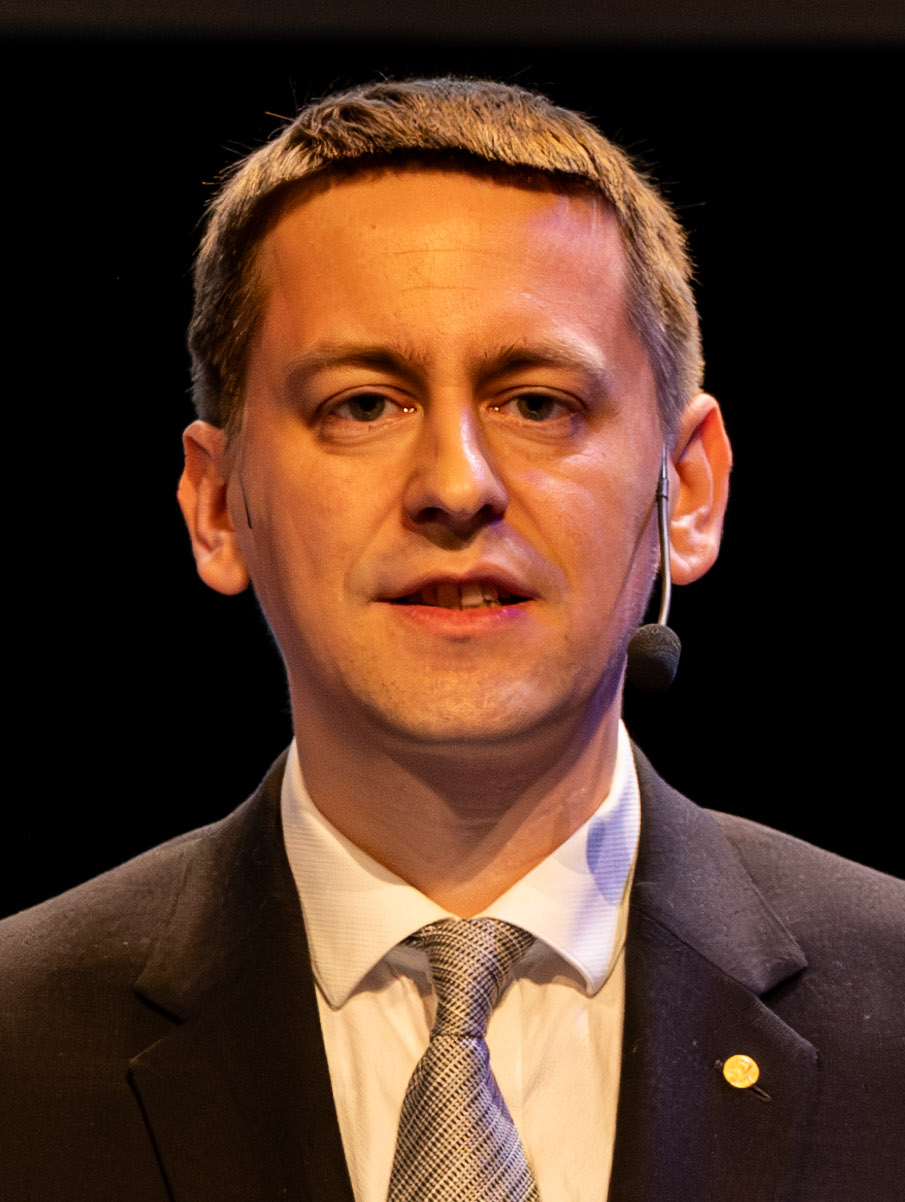
A Financial Times analysis reveals that Google DeepMind has moved most of AlphaFold's original creators to other projects over the past year, as the lab shifts from single grand scientific challenges to building Gemini-based agentic systems.
Contents
Google DeepMind has quietly dismantled the team behind AlphaFold, the AI system that predicted protein structures and won the 2024 Nobel Prize in Chemistry. According to a Financial Times analysis, most of the authors of the original AlphaFold papers have been moved to other projects over the past year, as the lab openly abandons its strategy of tackling single, grand scientific challenges in favor of building Gemini-based agents.
What the FT Analysis Found
The Financial Times examined personnel moves inside DeepMind and concluded that the dismantling of the AlphaFold team was not the result of isolated, independent decisions but a deliberate reorganization spread across the past year. Most of the original authors of the landmark protein structure prediction paper have been shifted to other teams, primarily those working on language models and coding agents.
A key episode was the transfer of John Jumper and Jonas Adler to a newly created internal Google team called Code Strike, tasked with catching up to Anthropic and OpenAI in AI-assisted coding tools. The move was meant to keep key researchers at Google, but it didn't work.
Departure to Anthropic
Last month, Jumper announced his departure for Anthropic. Adler and Alexander Pritzel, a third researcher from the original AlphaFold team, followed him. An anonymous DeepMind employee described the trio to the Financial Times as 'key, important, core members' of the team, and their joint departure caused a visible stir inside the company.
key, important, core members - an anonymous Google DeepMind employee, speaking to the Financial Times
The trio's departure for Anthropic coincided with the news that Noam Shazeer, co-creator of Gemini and the transformer architecture, was moving to OpenAI. Both personnel shifts happened within days of each other, which investors read as a worrying signal: Alphabet's stock fell by about 7 percent over two trading sessions, wiping out roughly $270 billion in market capitalization.
DeepMind's Strategy Shift
Pushmeet Kohli, DeepMind's VP of Research and founder of the AI for Science team, spent years pursuing a strategy built around defining single, precisely scoped grand scientific challenges, with protein structure prediction as its flagship example. Kohli has now acknowledged that this strategy has fundamentally changed.
Gemini-powered systems that can assist scientists in conducting research and ultimately automate parts of the scientific research process - Pushmeet Kohli, VP of Research, Google DeepMind
Instead of concentrating resources around single scientific problems like protein folding, DeepMind is now set to build Gemini-based systems that support scientists in conducting research and ultimately automate parts of the research process. The lab is simultaneously competing with OpenAI and Anthropic for the lead in the race for next-generation AI agents.
What This Means for AI-Assisted Science
For years, AlphaFold stood as the prime example that AI models could solve scientific problems once thought to be decades away from being cracked. Disbanding the team that built it raises the question of whether AlphaFold's success was a repeatable institutional capability at DeepMind, or simply the work of a specific group of people who now mostly work elsewhere, some at Isomorphic Labs, some at competitors.
For Anthropic, poaching three key AlphaFold researchers fits into the company's growing push into AI applications for science. For Google, it means having to prove that future Gemini-assisted scientific discoveries can be achieved without the team that built the lab's flagship project to date.
For Polish research institutions and biotech companies using AlphaFold-type tools, the practical takeaway is that progress on this line of research at Google may slow down, while competing centers, including Anthropic and Isomorphic Labs, absorb the expertise and are likely to accelerate their own computational biology projects.