News
CJEU Advocate General: The Algorithm Has Free Speech, Not the User
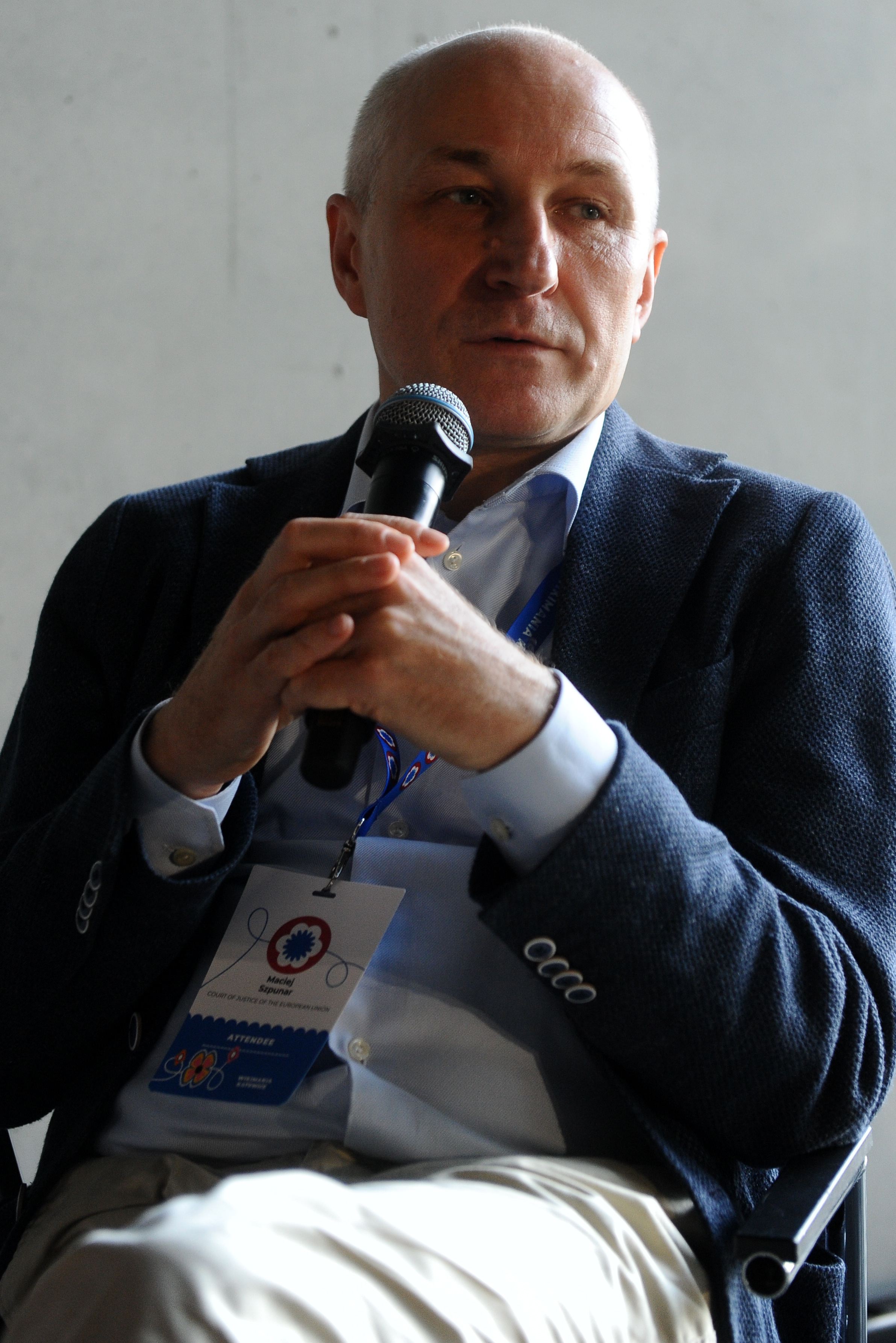
Maciej Szpunar, the first Advocate General of the Court of Justice of the EU, tells "Rzeczpospolita" that it is social media algorithms, not users, that actually exercise freedom of expression today. His remarks come as the EU court hears its first AI copyright case, Like Company v. Google.
Contents
The first Advocate General of the Court of Justice of the European Union, Maciej Szpunar, put forward a thesis in an interview for "Rzeczpospolita" that upends the current understanding of freedom of speech on the internet. In his view, it is not the user who publishes a post who decides who sees it, but the platform's algorithm, which filters and displays content according to its own, opaque rules. As a result, he says, it is the algorithm, not the person, that today actually exercises freedom of expression.
Who Really Speaks Online
Szpunar's thesis stems from a simple observation of how social media platforms work. A user publishes content, but it is the recommendation system that decides whether it reaches ten people or ten million. The same mechanism, transposed onto generative artificial intelligence, raises even more questions, because a chatbot not only distributes other people's content but also processes it, summarizes it, and passes it on in its own, altered form.
It is the algorithm that decides whether someone sees one piece of information or another. Paradoxically, this is not the user's freedom of speech, but the algorithm's freedom of speech - Maciej Szpunar, first Advocate General of the CJEU
Like Company Versus Google
Behind the interview lies a specific case pending before the EU court. The Hungarian publishing company Like Company has accused Google of having its Gemini chatbot prepare summaries of copyrighted press articles without a license, linking back to the source but at the same time replacing the reader's need to visit the original page. In April 2025, the Hungarian court referred preliminary questions to the CJEU, asking directly whether this kind of generative AI activity violates press publishers' rights guaranteed under Article 15 of the EU's Digital Single Market Copyright Directive.
This is the first case in which the EU court will have to interpret publisher rights provisions in the context of chatbots based on large language models. The ruling, once issued, will set a precedent for the entire media industry in Europe, since similar disputes over generative AI are already underway in other jurisdictions, including the United States.
Regulation Doesn't Kill Innovation
Szpunar rejects the argument that regulating artificial intelligence must necessarily slow technological development. He draws an analogy to the early years of the internet, when similar concerns accompanied the first attempts to regulate the web.
Reality has shown that some form of internet regulation is necessary - Maciej Szpunar, first Advocate General of the CJEU
The Advocate General stresses that courts will increasingly have to determine who bears responsibility when artificial intelligence is used for unlawful purposes, the model's creator, the platform operator, or the user themselves. This question applies both to AI-generated content and to decisions made by autonomous systems.
Copyright Law Under AI Pressure
The second thread of the interview concerns the dispute over whether training AI models on copyrighted content should require creators' prior consent (opt-in), or rather the possibility of objecting (opt-out), as currently provided under EU law. Szpunar admits that today's legal tools, designed with classical copyright law in mind, do not fit well with the specifics of systems that learn from billions of documents at once.
The Advocate General goes further, questioning the very assumption underlying copyright protection, namely that it is determined by human creative effort. As an example, he cites photography, a field where technology has long blurred the line between craft and automatic image capture, yet the law still protects photographs as works.
Significance for Poland and Publishers
For Polish publishers and content creators, the ruling in Like Company v. Google carries direct significance, since it will establish the standard by which generative AI will, or will not, be free to summarize and redistribute press articles across the European Union. The Polish media industry, like the Hungarian one, has been signaling for months that traffic to news sites drops when readers get an answer from a chatbot instead of clicking through to the source link.
In the interview, Szpunar also addressed the rule of law situation in Poland, saying it deeply concerns him, and that undermining judicial independence is easy, but rebuilding it takes far longer. This is a separate thread from the AI issue, but it shows that the Advocate General links several current disputes over the role of law in relation to technology and power in his remarks.
The Advocate General's opinion in the Like Company v. Google case has not yet been issued, the court is at an earlier stage of proceedings. The eventual CJEU ruling will, however, be binding on the courts of all 27 member states, including Poland, and could force changes in the way companies like Google license press content for training and running their language models.