News
China's First Fully AI-Generated Long-Form Drama Hits Prime-Time TV
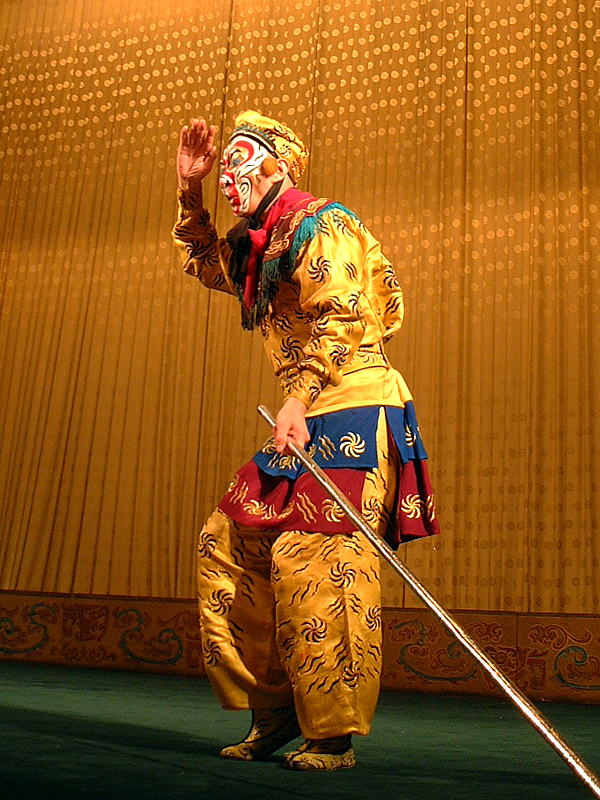
"The Later Journey to the West," a 30-episode series with no human actors, aired on Hunan Satellite TV and sparked fierce debate about the quality and future of Chinese television. Shares of parent company Mango TV hit the daily trading limit two days in a row.
Contents
Chinese state television has for the first time given a prime-time slot to a series with not a single human actor in it. "The Later Journey to the West," loosely based on the classic novel about the Monkey King, aired on Hunan Satellite Television and streamed simultaneously on Mango TV, prompting an immediate and sharply divided reaction from Chinese viewers and investors alike.
What Aired
This is not an amateur online production but a full multi-episode drama commissioned by one of China's biggest television networks. Every character, fight scene and special effect was generated with AI video tools, with no actors, makeup or traditional film set involved. The producers used a rolling production model, where filming, regulatory review and broadcast happen in parallel, letting later episodes be adjusted based on audience reaction before they even air.
The Market Reacted Faster Than the Critics
The most tangible effect of the premiere showed up on the stock market. Listed company Mango Excellent Media, which operates Hunan TV and Mango TV, hit its daily 20 percent trading limit twice within a week before giving back some of the gains. In total, the company's market value rose by more than 13 billion yuan, or about $1.9 billion, while trading volume on premiere day exceeded 700 million yuan.
For China's media sector, which has long been grappling with falling ad revenue and shrinking TV audiences, the signal was clear: investors see AI-generated production as a way to slash costs while keeping the nationwide reach of a satellite broadcaster.
This sends a clear signal of policy support. AI drama is entering the mainstream - anonymous producer at a Beijing television company, quoted by South China Morning Post
Viewers Split Into Two Camps
Public reaction turned out to be far more polarized than the market's. Some viewers praised the production for its bold take on a Chinese literary classic, while others openly mocked the quality of the character animation and movement. Despite the criticism, the series topped Mango TV's prime-time ratings on premiere day.
With a bit of skill, all the monkeys have a charisma similar to a human's - viewer comment quoted by 36Kr
Is this just animation? - viewer comment quoted by 36Kr
Reviewers noted that the production avoids the most common flaws of generated video, such as unnatural frame transitions or facial distortions, with its visual quality sometimes compared to mid-tier fantasy series. The director said later episodes would be refined on an ongoing basis based on viewer feedback collected after broadcast began.
Why It Matters Beyond China
This is the first time an AI-generated long-form series has aired on a major satellite network rather than just on short-video platforms like Douyin, where similar AI content has already racked up hundreds of billions of views. The shift from social media to prime time suggests Chinese regulators and broadcasters now consider the technology ready for commercial television, not just an online experiment.
For the global TV and film production market, this signals that the cost of a full-length drama could shrink from months of shooting and actor budgets down to a few months of AI studio work. At the same time, pressure is building around transparency toward viewers, along with questions about where actors, stunt performers and film crews fit into this production model.
For Poland's media market, the development points to a possible direction for low-cost series production, especially in budget and experimental segments, though language barriers, copyright rules and actor likeness rights remain far stricter in Europe than in China.