News
Chinese Company BrainCo Unveils Mind-Controlled Robot Platform
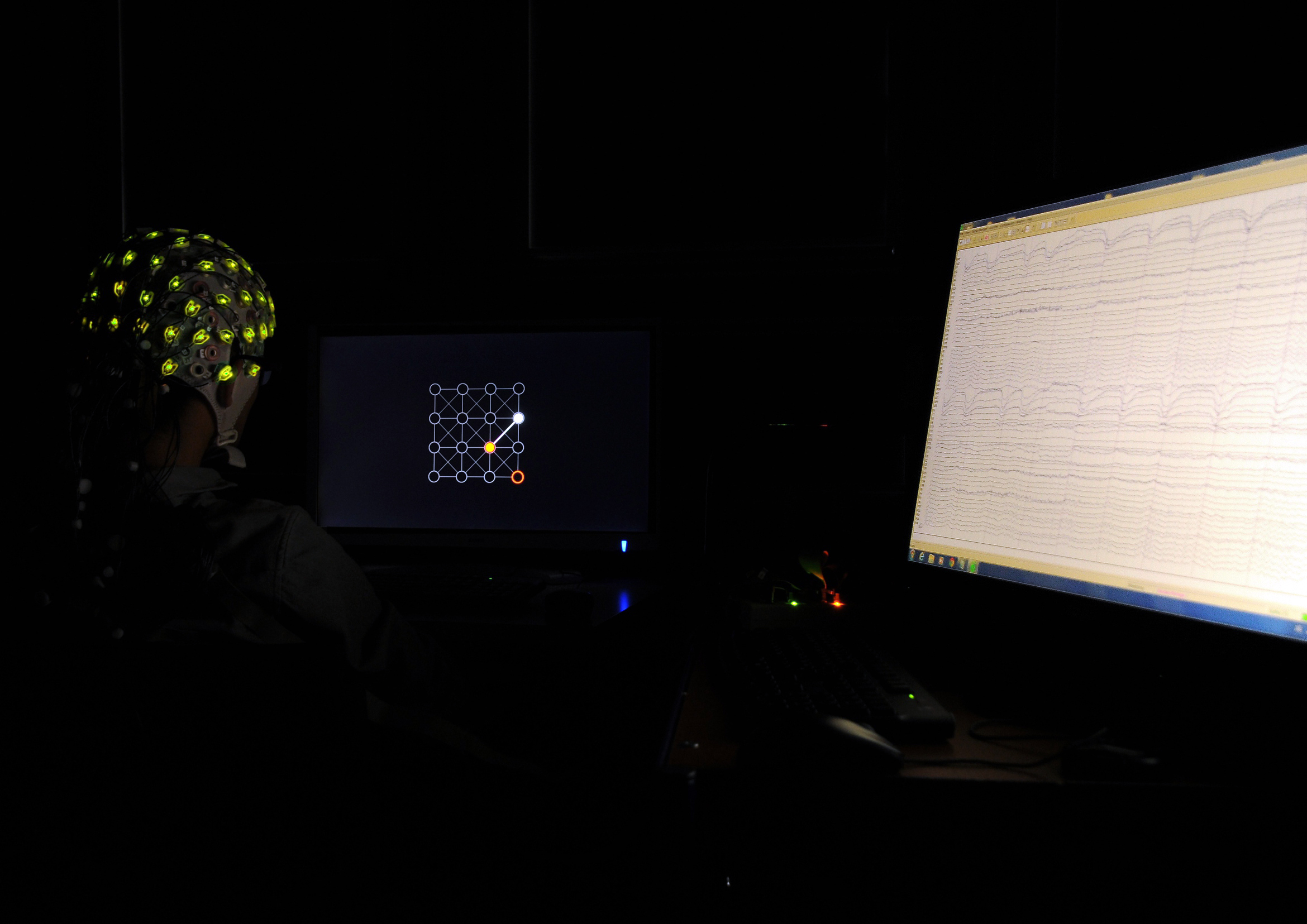
At WAIC 2026 in Shanghai, Chinese company BrainCo unveiled the first integrated platform linking brain signals to humanoid robots, robotic arms and four-legged robots. The system is designed not just to control machines but to generate training data for future AI models.
Contents
Chinese company BrainCo unveiled a platform at the World Artificial Intelligence Conference 2026 in Shanghai that lets users control robots using only brain signals. The user wears a lightweight EEG headband interface, and artificial intelligence algorithms read movement intentions from the brain's electrical activity and translate them into commands for the machine.
The company calls its solution the world's first integrated brain-to-robot platform. Unlike earlier demonstrations of controlling a single device with thoughts, BrainCo has built an architecture open to third-party hardware, meant to let different types of robots connect to it without separately wiring each model.
How intent decoding works
The process runs in three steps. First, the EEG headband picks up the brain's electrical activity through electrodes placed against the scalp, with no surgery or implants required. Algorithms then analyze the collected signals, trying to recognize patterns that correspond to the user's specific intentions and filter out background neural noise. Finally, the decoded command is sent to the connected robot, which carries out the requested action.
In demonstrations shown at the conference, a user thought about reaching for an object, and a robotic arm picked up a cup without any physical movement from the person. BrainCo emphasizes that decoding intent, rather than just simple movement commands, is what sets the system apart from earlier brain-computer interfaces limited to choosing from a closed list of options.
The embodied AI industry has made huge progress in what robots can do on their own. We believe the next decisive frontier is how robots understand the humans they work with - Nyx He, Vice President of BrainCo
A decade of brain-computer interface research has given us the ability to decode what a person intends to do and translate that into a machine's action - Nyx He, Vice President of BrainCo
Training data, not just control
The platform's second goal is to gather data for training future AI models for robots. BrainCo says it will combine three sources: real task execution by robots, demonstrations recorded by humans, and computer simulations. This is meant to produce far richer and more varied datasets than those built solely from recordings of the robots themselves.
The approach fits into the broader embodied AI trend, where companies are looking for ways to speed up robot learning without manually programming every action. Data drawn directly from human intent could, in theory, shorten the time needed to teach a robot new tasks, since it skips the step of translating a command into code.
Chinese context and Neuralink rivalry
Brain-computer interfaces made it into a Chinese government report this year as a priority technology. In Chongqing, doctors have already moved from research to clinical use, with a stroke patient there undergoing movement rehabilitation in March 2026 using wearable BCI-based devices. BrainCo, based in Hangzhou, previously developed EEG headbands for monitoring students' concentration and is now moving into robotics applications.
In the global BCI market, the biggest name remains Elon Musk's Neuralink, which has said it plans to begin mass production of its devices in 2026 and raised $650 million in a Series E round in 2025. Unlike Neuralink, which relies on implanted electrodes requiring neurosurgery, BrainCo's platform works entirely from signals collected outside the skull, which limits precision but eliminates surgical risk.
Limitations and open questions
BrainCo has not disclosed specific performance metrics for the system, such as intent-recognition accuracy, the lag between a thought and the robot's movement, or how many users have tested it. The company acknowledges that non-surgical EEG systems have limitations outside controlled lab conditions, and says it will keep working to improve reliability beyond the demo setting.
Planned applications include limb prosthetics, wheelchairs and communication devices for patients with limited mobility, as well as controlling industrial robots in factories. For now, though, these are stated directions for development, not finished commercial deployments.