News
AI Avatar of Bolsonaro Speaks at Son's Campaign Launch Despite Court Ban
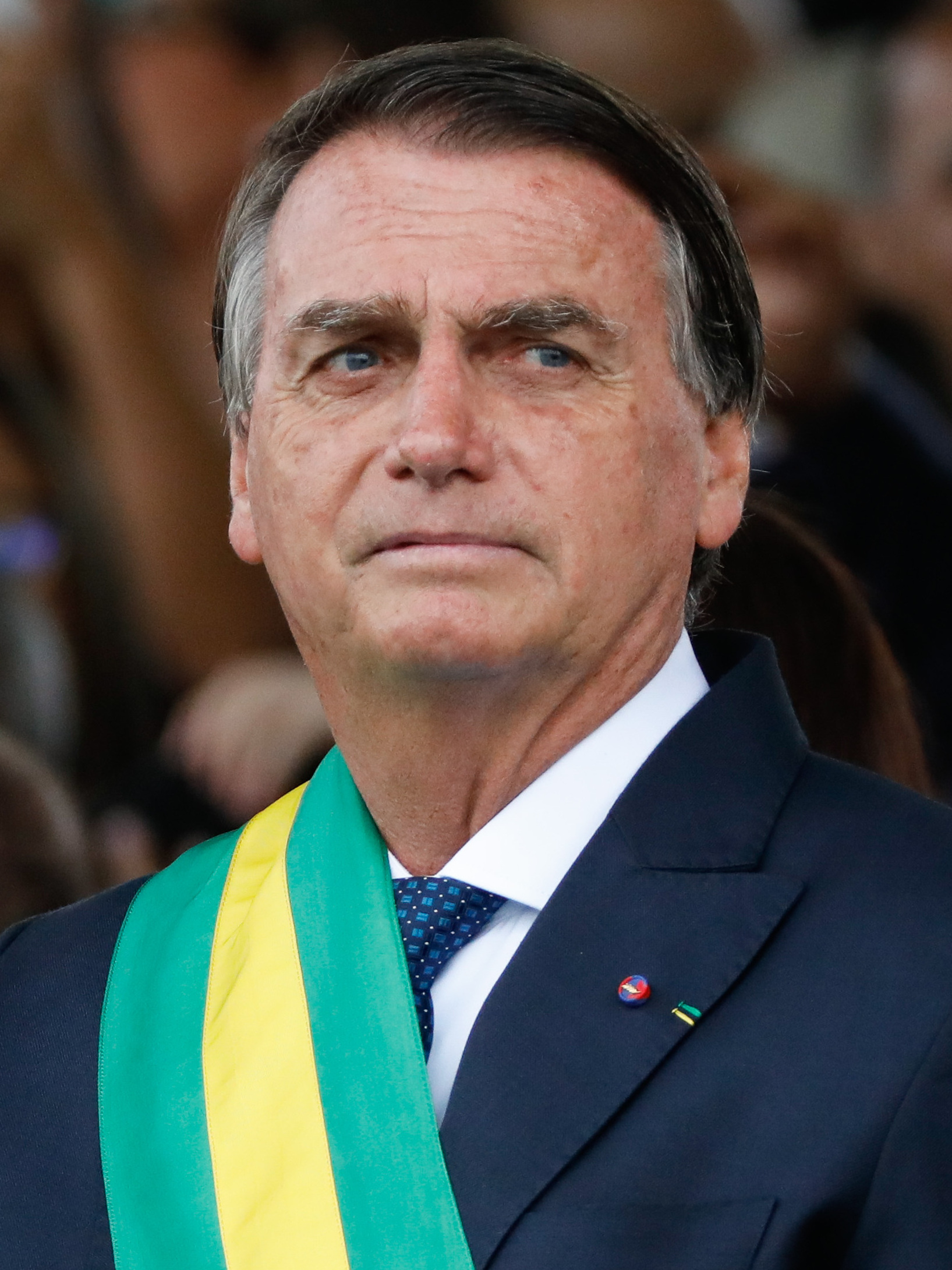
An AI-generated digital avatar of Jair Bolsonaro addressed his son Flávio's presidential campaign launch in São Paulo, despite a court order barring him from any public political statements. The case has already reached Brazil's top electoral court.
Contents
Jair Bolsonaro is under house arrest and subject to a court order barring him from speaking on politics, but on Saturday, July 26, 2026, he addressed a crowd anyway. He did so as a digital avatar generated by artificial intelligence, displayed on a screen during the launch of his son's presidential campaign, Senator Flávio Bolsonaro, in São Paulo.
The footage was shown during the official PL party convention, where Flávio Bolsonaro formally announced his candidacy. The digital version of his father addressed the crowd and endorsed his son as the one carrying forward the political movement he himself built.
No prison silences the hope we inspired - AI avatar of Jair Bolsonaro, video from the PL party convention
A Ban Not Directly Broken
Jair Bolsonaro was convicted of attempting to overturn the results of the 2022 election and was barred from running for office for eight years starting in 2023. Supreme Court Justice Alexandre de Moraes also barred him from any public communication of a political nature, direct or indirect. Flávio Bolsonaro's legal team argues the video does not violate that ban, since it is not a deceptive deepfake blending real and fake footage but material openly labeled as an AI product.
That line, between an openly labeled avatar and hidden manipulation, has become the center of the legal dispute. The coalition of left-wing and center-left parties filed a complaint over the matter with the Tribunal Superior Eleitoral, arguing the material violates Brazilian rules on synthetic media in campaigns and effectively skirts the court's communication ban.
A Divided Judiciary
Brazil's judiciary has not responded with one voice. Part of the TSE views the case as less serious, since the material was labeled as AI-generated and did not pass itself off as authentic footage. Supreme Court Justice Kassio Nunes Marques said AI can be legally used in campaigns as long as it isn't used to harm others or spread disinformation, though he avoided commenting directly on this specific case.
Other justices take a harsher view. Supreme Court Minister Flávio Dino commented on the case by drawing a parallel between totalitarianism and fraud, signaling that he sees the use of the avatar as an attempt to bypass democratic safeguards rather than a neutral technological innovation.
Lawyers Cite Unclear Rules
Election law expert and researcher Ivar Hartmann notes that Bolsonaro could avoid consequences if he proves he did not personally record or authorize the content attributed to his avatar, which in practice shifts responsibility onto his son's campaign team. Experts stress that Brazil still lacks precise rules governing the use of generative AI in election campaigns, so courts must interpret existing disinformation and defamation law, setting precedent as they go.
Echoes of Earlier Cases
The Bolsonaro avatar case fits into a broader trend of generative AI use in politics. Ahead of the 2024 US primaries, voters in New Hampshire received calls featuring a fake, computer-generated voice of Joe Biden urging them not to vote, which pushed the US Federal Communications Commission to try to ban synthetic voices in robocalls. Unlike that case, the Bolsonaro avatar did not hide its origin, making this a precedent of a different kind: not whether AI can deceive voters, but whether an openly labeled digital double can serve as the political proxy of a person legally barred from the media.
For Poland and the European Union, the case carries weight beyond Brazil. EU rules requiring the labeling of AI-generated content take effect on August 2, and the dispute over the Bolsonaro avatar shows that labeling material as AI-generated does not by itself resolve whether such material may be used when the real person is under a speech ban. That question will sooner or later come up in European campaigns too.
Flávio Bolsonaro is competing in the October election against incumbent President Lula da Silva, and the case of his father's avatar will likely be one of the first major tests of how Brazil's electoral system handles generative AI in a top-level campaign. The TSE's ruling could also become a reference point for other countries still drafting their own rules on the matter.